
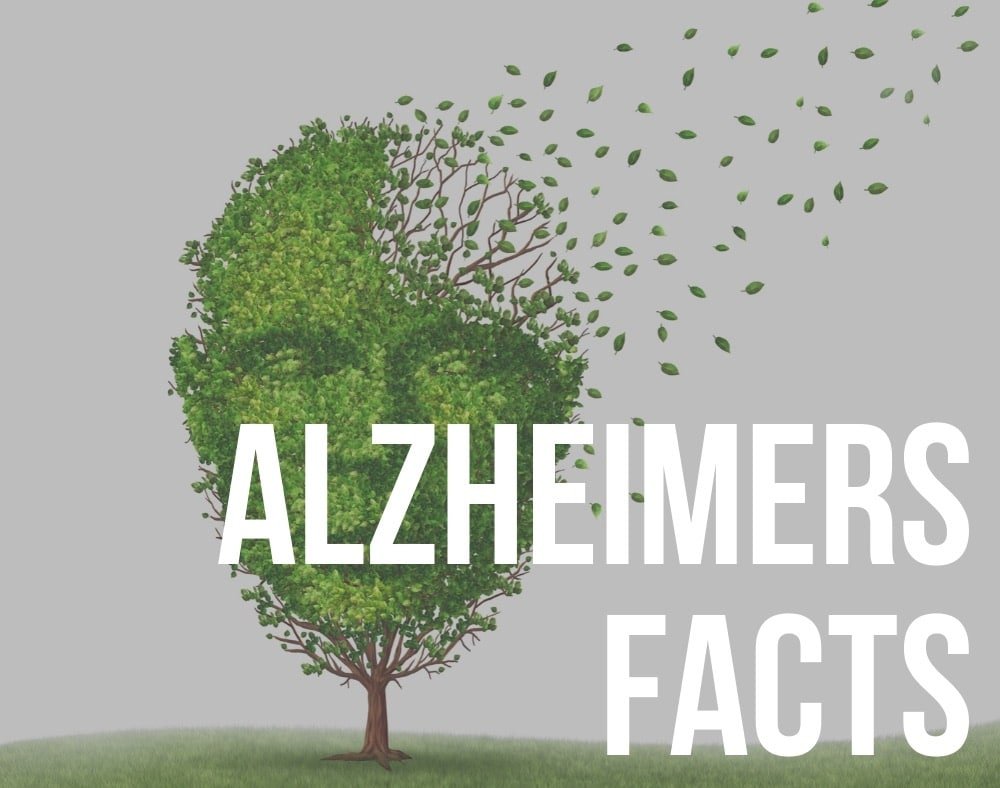
Alzheimer’s statistics help show just how significant the disease has become for individuals, families, caregivers and the health care system.
Alzheimer’s disease is the most common cause of dementia among older adults. While age is the greatest known risk factor, Alzheimer’s is not considered a normal part of aging.
The figures below draw on recent data from the Alzheimer’s Association and the National Institute on Aging (NIA).
Alzheimer’s Statistics and Key Facts
1. About 7.4 Million Americans Age 65 and Older Have Alzheimer’s
According to the Alzheimer’s Association’s 2026 Alzheimer’s Disease Facts and Figures report, an estimated 7.4 million Americans age 65 and older are living with Alzheimer’s dementia.
About 74% of them are age 75 or older.
This represents approximately 1 in 9 Americans age 65 and older.
The number is expected to continue increasing as the population ages. By 2050, nearly 13 million Americans could be living with Alzheimer’s.
For a broader explanation of the condition, see our Alzheimer’s disease guide.
2. Age Is the Greatest Known Risk Factor for Alzheimer’s
Age does not cause Alzheimer’s by itself, but the likelihood of developing the disease increases considerably as people get older.
The National Institute on Aging identifies age as the greatest known risk factor for Alzheimer’s.
Most people who develop the disease are 65 or older.
However, Alzheimer’s should not be considered an inevitable consequence of aging. Many people live into their 80s, 90s and beyond without developing the disease.
Our guide to the average age for Alzheimer’s disease looks at this relationship in more detail.
3. Alzheimer’s Disease and Dementia Are Not the Same Thing

The terms Alzheimer’s and dementia are often used interchangeably, but they do not mean exactly the same thing.
Dementia is an umbrella term used to describe a decline in memory, thinking and other cognitive abilities that interferes with daily life.
Alzheimer’s disease is a specific brain disease and is the most common cause of dementia.
Other causes include:
- Vascular dementia
- Dementia with Lewy bodies
- Frontotemporal dementia
- Mixed dementia
- Parkinson’s disease dementia
It is also possible for a person to have brain changes associated with more than one type of dementia.
4. Alzheimer’s Can Develop Before Age 65
Although Alzheimer’s is strongly associated with older age, younger people can also develop the disease.
When symptoms develop before age 65, it is generally called younger-onset or early-onset Alzheimer’s disease.
The National Institute on Aging reports that fewer than 10% of people with Alzheimer’s develop symptoms before age 65.
Some rare genetic variants can strongly increase the likelihood of developing Alzheimer’s at a younger age.
However, the vast majority of Alzheimer’s cases are not caused by one single inherited gene.
5. Almost Two-Thirds of Americans With Alzheimer’s Are Women

Women account for almost two-thirds of Americans living with Alzheimer’s dementia.
Of the estimated 7.4 million Americans age 65 and older living with Alzheimer’s, approximately 4.5 million are women and 2.9 million are men.
One important reason is longevity. Women, on average, live longer than men, and older age is the greatest risk factor for Alzheimer’s.
Researchers continue to investigate whether biological, genetic and other factors may also contribute.
Lifetime risk statistics are also striking. At age 45, the estimated lifetime risk of developing Alzheimer’s dementia is approximately 1 in 5 for women and 1 in 10 for men.
You can also read about signs of dementia in women.
6. Alzheimer’s and Other Dementias Affect Population Groups Differently

There are significant differences in the prevalence of Alzheimer’s and other dementias among population groups in the United States.
According to the Alzheimer’s Association, older Black Americans are about twice as likely to have Alzheimer’s or another dementia as older White Americans.
Older Hispanic Americans are about one and a half times as likely.
These differences do not necessarily reflect race itself as a biological cause.
Researchers continue to examine factors including cardiovascular health, access to health care, education, socioeconomic conditions, discrimination and other lifelong influences on brain health.
7. Alzheimer’s Is a Major Cause of Death

Alzheimer’s disease remains a major cause of death in the United States.
The Alzheimer’s Association reports that Alzheimer’s was officially listed as the fifth-leading cause of death among Americans age 65 and older in 2024.
Deaths attributed to Alzheimer’s more than doubled between 2000 and 2024.
Importantly, death certificates may not capture every death in which Alzheimer’s or another dementia contributed.
A person may ultimately die from complications such as pneumonia, infections, swallowing difficulties or other conditions associated with advanced dementia.
8. Survival After an Alzheimer’s Diagnosis Varies Considerably

There is no single life expectancy that applies to everyone diagnosed with Alzheimer’s.
According to the Alzheimer’s Association, people age 65 and older survive an average of around four to eight years after diagnosis, although some people live for as long as 20 years.
Survival can be influenced by:
- Age at diagnosis
- General physical health
- Other medical conditions
- Severity of symptoms when diagnosed
- The rate at which the disease progresses
As Alzheimer’s progresses, people generally require increasing levels of help with everyday activities.
Support from family members and caregivers therefore becomes increasingly important.
9. Nearly 13 Million Americans Provide Unpaid Dementia Care
Alzheimer’s statistics also reveal the enormous impact the disease has on families.
Nearly 13 million Americans provide unpaid care for a family member or friend living with Alzheimer’s or another dementia.
During 2025, unpaid caregivers provided more than 19 billion hours of care.
The estimated economic value of this unpaid care was more than $446 billion.
Caregiving may involve:
- Helping with meals and personal care
- Managing medications
- Providing transportation
- Managing finances and appointments
- Supervising a person for safety
- Providing emotional support
As dementia progresses, caregiving demands can become substantial.
10. Alzheimer’s and Dementia Care Costs Hundreds of Billions of Dollars
The financial impact of Alzheimer’s and other dementias continues to grow.
Health care and long-term care costs for Americans living with dementia are projected to reach approximately $409 billion in 2026.
This does not include the value of unpaid family caregiving.
Medicare and Medicaid are expected to account for a large proportion of these costs, while families also face significant out-of-pocket expenses.
By 2050, annual health and long-term care costs for people with dementia are projected to approach $1 trillion.
These Alzheimer’s statistics demonstrate that the effects of the disease extend well beyond the individual diagnosed.
Can Alzheimer’s Disease Be Cured or Reversed?

There is currently no cure for Alzheimer’s disease.
However, the treatment landscape has changed considerably in recent years.
Some treatments can help manage symptoms, while newer disease-modifying treatments may slow cognitive and functional decline in some people with early Alzheimer’s disease who meet specific treatment criteria.
This is different from reversing the disease or restoring brain function that has already been lost.

Anyone experiencing persistent changes in memory, thinking or behavior should discuss them with a qualified health professional rather than assuming that they are simply part of getting older.
What Do Alzheimer’s Statistics Tell Us?
The numbers demonstrate the growing health, social and economic impact of Alzheimer’s disease.
More Americans are living long enough to reach the ages at which Alzheimer’s becomes more common. At the same time, advances in diagnosis, biomarkers and treatment are changing how the disease is identified and managed.
Statistics also help put the disease into perspective.
Alzheimer’s is not simply occasional forgetfulness. It is a progressive brain disease that can eventually affect memory, reasoning, communication, mobility and the ability to carry out everyday activities.
Importantly, Alzheimer’s is not a normal part of aging.
Research continues into the causes of the disease, earlier diagnosis, risk reduction and treatments that may slow or eventually prevent its progression.
Related Articles
Alzheimer’s Disease: Complete Guide