Looking for the best therapy dolls for dementia? We originally reviewed a selection of dementia therapy dolls in 2023. This guide has now been updated to remove products that are no longer available and to focus on six options that remain relevant.
Therapy dolls may provide comfort, companionship and a sense of purpose for some people living with dementia. However, they are not suitable for everyone, and the person’s individual preferences and response should always guide their use.
Affiliate disclosure: This article contains affiliate links. If you purchase through one of these links, ReaDementia may earn a commission at no additional cost to you.
Before choosing a doll, you may also want to read our guide to the pros and cons of doll therapy for dementia.
Best Therapy Dolls for Dementia: Quick Picks
- Best purpose-designed option: Newborn Comfort Therapy Doll
- Best premium lifelike option: Ashton-Drake Comfort Doll
- Best soft weighted reborn option: CHAREX Reborn Baby Doll
- Best washable option: JIZHI Lifelike Reborn Baby Doll
- Best well-reviewed alternative: Zero Pam Reborn Baby Doll
- Best budget weighted option: Kaydora Reborn Baby Doll
Can Therapy Dolls Help People With Dementia?
Doll therapy is a non-drug, person-centered activity that has been used in dementia care for many years.
A systematic review indexed by the U.S. National Library of Medicine found that doll therapy was associated with improvements in emotional state, communication and some behavioral symptoms in people with dementia.
A later systematic review and meta-analysis also reported potential benefits for behavioral and psychological symptoms, including agitation, among nursing-home residents with dementia.
However, therapy dolls should not be presented as a guaranteed treatment. Some people enjoy and connect strongly with a doll, while others may be uninterested, uncomfortable or even distressed by one.
What to Look for in a Therapy Doll
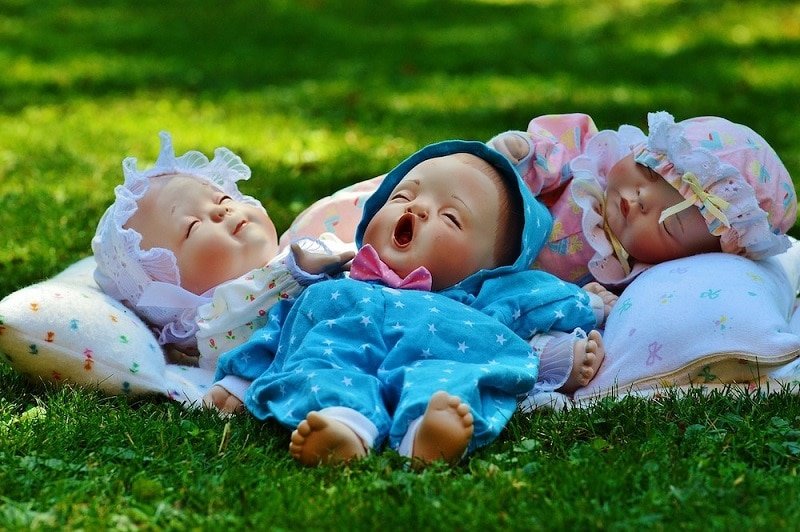
The best therapy doll will depend on the individual.
Useful features can include:
- A soft, comfortable body
- Appropriate weight
- A realistic but friendly appearance
- Durable construction
- Easy-to-clean materials
- Clothing that is easy to remove and wash
- Moveable arms and legs
- A size that is comfortable to hold
A highly realistic doll may appeal to one person, while another may prefer something softer and less realistic.
How to Introduce a Therapy Doll
Do not force a person with dementia to interact with a doll.
Instead, introduce the doll naturally and allow the person to notice it in their own time.
If they show interest, you might ask:
- “Would you like to hold the baby?”
- “What do you think of this little one?”
- “Would you like to sit with the baby for a while?”
Observe their response.
If they smile, cuddle the doll, talk to it or appear relaxed, the experience may be positive.
If they become anxious, distressed or irritated, remove the doll gently and try another activity.
If the person recognizes that it is a doll, there is no need to insist otherwise. You can simply talk about how lifelike it looks or use it to encourage memories and conversation.
6 Best Therapy Dolls for Dementia Reviewed
1. Newborn Comfort Therapy Doll – Alzheimer’s Store
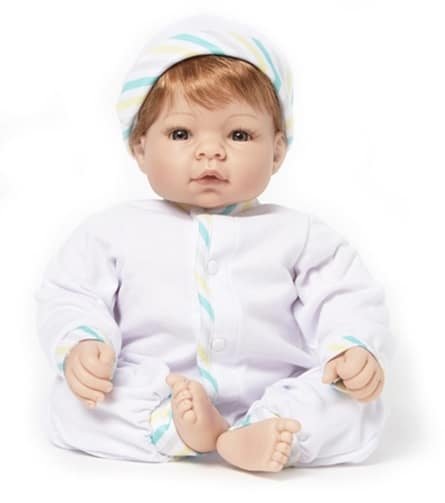
The Newborn Comfort Therapy Doll remains one of the strongest options in this guide because it is specifically selected for adults with memory loss rather than being designed primarily as a children’s toy.
The approximately 19-inch doll has a soft weighted fabric body with molded head and limbs. Its weighting helps create a more substantial and realistic feeling when held.
Several styles are available, allowing caregivers to choose a doll that may feel familiar and appropriate for the individual.
The specialist memory-care design is the main reason we rate this product highly. It is more expensive than many ordinary reborn dolls, but families looking for a purpose-selected dementia therapy doll may consider the additional cost worthwhile.
Pros
- Selected specifically for adults with memory loss
- Weighted body
- Soft cloth torso
- Realistic appearance
- Several styles available
- Washable clothing
Cons
- More expensive than many standard reborn dolls
- International shipping can be expensive
View Newborn Comfort Therapy Dolls at the Alzheimer’s Store
2. Ashton-Drake Comfort Doll

The Ashton-Drake Comfort Doll is a premium lifelike doll that may suit people with dementia who respond positively to realistic baby dolls.
Ashton-Drake produces highly detailed collectible dolls with features such as realistic vinyl skin, detailed facial features and weighted or poseable bodies, depending on the particular model.
Some Ashton-Drake models also include interactive features such as simulated breathing, heartbeat or baby sounds. These features may add to the experience for some people, although others may prefer a simpler doll without electronics.
This is not a specialist dementia therapy product. However, its realistic appearance and substantial feel make it an interesting alternative to dolls made specifically for memory care.
Pros
- Highly realistic appearance
- Premium construction
- Weighted and poseable designs
- Detailed facial features
- Some models include interactive features
- Good option for people who enjoy very lifelike dolls
Cons
- More expensive than many Amazon alternatives
- Not specifically designed for dementia care
- Interactive models may require batteries
- More collectible in design than some specialist therapy dolls
Check the Ashton-Drake Comfort Doll on Amazon
3. CHAREX Reborn Baby Doll
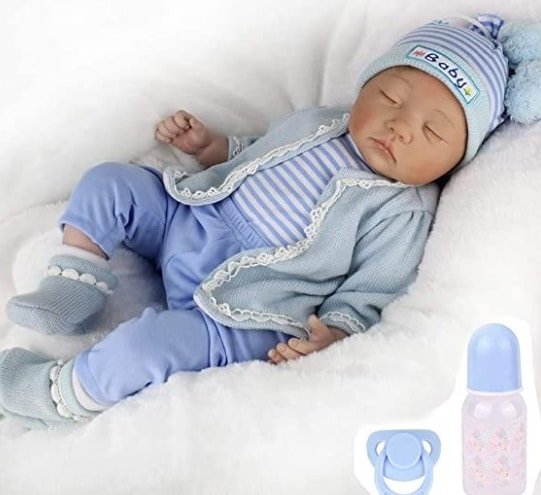
The CHAREX Reborn Baby Doll provides a lower-cost option for families wanting a realistic-looking baby without paying the higher price of a specialist dementia therapy doll.
The current CHAREX range includes lifelike newborn-style dolls with detailed facial features and realistic hands and feet. Soft-bodied and weighted versions are particularly worth considering for someone who enjoys holding and cuddling a doll.
The sleeping-baby appearance may also appeal to people who prefer a calm-looking doll.
CHAREX dolls are primarily designed for the general reborn-doll market rather than dementia care. Even so, the combination of realistic appearance, comfortable size and lower price may make them suitable for some people living with dementia.
Pros
- Lifelike appearance
- Soft-bodied options
- Weighted models available
- Detailed hands, feet and facial features
- Accessories commonly included
- Less expensive than specialist memory-care dolls
Cons
- Not specifically designed for dementia care
- Specifications can vary between CHAREX models
- Sleeping or fixed-eye designs may not appeal to everyone
Check the current CHAREX doll on Amazon
4. JIZHI Lifelike Reborn Baby Doll
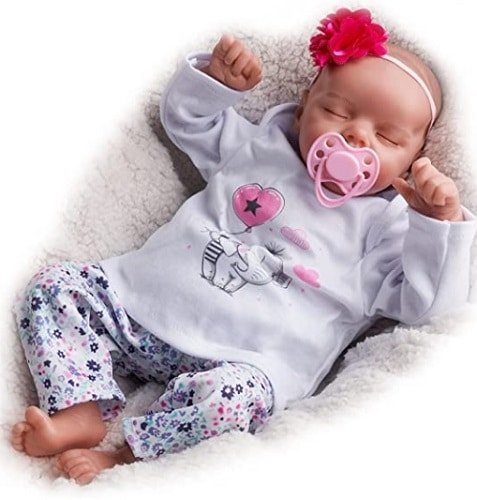
The JIZHI Lifelike Reborn Baby Doll is an affordable alternative for families who want a realistic doll without the price of a specialist therapy product.
The JIZHI model we selected has a realistic newborn appearance with detailed features and poseable limbs.
One useful feature of full-vinyl models is that they are easier to wipe clean than cloth-bodied dolls. This may be helpful when a person enjoys actively caring for or handling the doll.
On the other hand, an all-vinyl body generally does not feel as soft or naturally weighted as a specialist memory-care doll with a fabric body.
For families wanting to try doll therapy without making a large initial investment, JIZHI represents a practical lower-cost option.
Pros
- Realistic appearance
- Poseable limbs
- Detailed hands and feet
- Easy-to-clean models available
- Accessories included with many versions
- Good lower-cost option
Cons
- Not specifically designed for dementia care
- Full-vinyl models feel less soft than cloth-bodied dolls
- Less realistic weighting than specialist therapy dolls
Check the JIZHI Lifelike Reborn Baby Doll on Amazon
5. Zero Pam Reborn Baby Doll
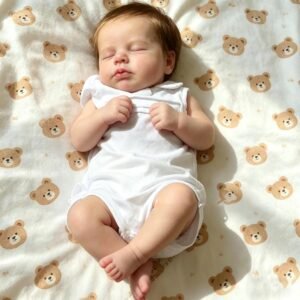
The Zero Pam Reborn Baby Doll is another realistic option for families considering doll therapy for a person with dementia.
We selected this current Zero Pam option because it combines a lifelike baby appearance with strong buyer feedback.
Zero Pam produces a range of realistic reborn dolls, so the exact materials, weight and accessories can vary between individual models. For dementia use, we recommend checking the product specifications carefully and favoring a model that is comfortable to hold and not excessively heavy.
This is not a doll created specifically for dementia therapy. However, for someone who enjoys realistic baby dolls, it may provide many of the same opportunities for cuddling, nurturing, conversation and engagement.
Pros
- Lifelike appearance
- Strong buyer feedback on the selected product
- Comfortable size for holding
- Several Zero Pam styles available
- Typically less expensive than specialist memory-care dolls
Cons
- Not specifically designed for dementia care
- Materials and weight vary between models
- Individual preferences will determine whether a highly realistic doll is appealing
Check the Zero Pam Reborn Baby Doll on Amazon
6. Kaydora Reborn Baby Doll
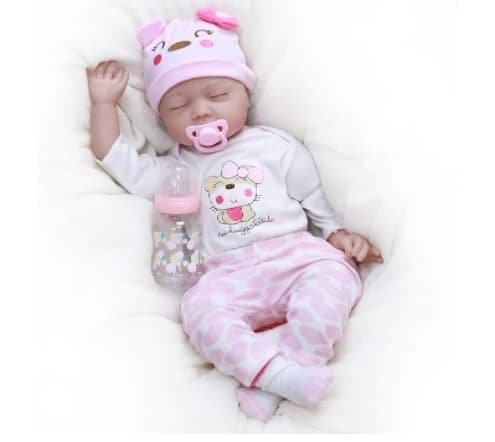
The Kaydora Reborn Baby Doll is another lower-priced realistic doll worth considering.
Kaydora offers a variety of lifelike reborn dolls, including soft-bodied and weighted models.
The version we originally reviewed had realistic facial features, detailed hands and feet and a soft weighted body that made it comfortable to hold.
This combination can make it suitable for someone who enjoys cuddling and caring for a baby doll without requiring the higher investment associated with a specialist memory-care product.
Pros
- Realistic appearance
- Weighted options
- Soft-bodied models available
- Detailed hands and feet
- Accessories often included
- Good value compared with specialist therapy dolls
Cons
- Not specifically designed for dementia care
- Specifications vary between models
- Hair and finish may vary
- Some versions have fixed eyes
Check the Kaydora Reborn Baby Doll on Amazon
Specialist Therapy Doll vs. Reborn Baby Doll
There is an important difference between a doll selected specifically for memory care and a reborn doll primarily designed as a toy or collectible.
Specialist dementia therapy dolls tend to emphasize:
- Comfortable weighting
- Soft bodies
- Durability
- Easy handling
- Calm and friendly facial expressions
Standard reborn dolls may provide many of the same features for a lower price, but quality and suitability can vary considerably.
If possible, choose the doll based on the individual rather than simply buying the most realistic-looking product.
Respect the Person’s Choice
Doll therapy should remain person-centered.
Do not assume that every woman with dementia wants a baby doll, or that someone who raised children will automatically enjoy one.
Men may also enjoy doll therapy, while some people of either sex may strongly dislike it.
Watch the person’s reaction and allow them to decide whether they want to participate.
If the doll provides comfort, companionship or enjoyment, continue using it naturally.
If it creates anxiety or distress, remove it.
Best Therapy Dolls for Dementia: Final Thoughts
The best therapy dolls for dementia are not necessarily the most expensive or the most realistic.
The right doll is the one that feels comfortable, familiar and enjoyable to the individual using it.
For people who respond positively, a therapy doll may encourage nurturing behavior, conversation and emotional connection.
Among the products we reviewed, the Newborn Comfort Therapy Doll stands out because it is selected specifically for adults with memory loss. The other realistic reborn dolls provide less expensive alternatives for families who want to see how their loved one responds before investing in a specialist product.
Whatever doll you choose, introduce it gently, respect the person’s response and remember that the objective is comfort and engagement — not convincing someone that the doll is real.