How to Help People With Dementia Remain Independent

how to help people with dementia remain independent

When caring for someone with dementia, it can be challenging to get the right balance between being helpful and supportive and allowing your loved one to retain their independence for as long as possible.

According to Dementia Carers Count, there are currently 700,000 people in the UK (15.7 million in the US) who care for someone with dementia, with 40% of these carers looking after their loved one 24 hours a day, 7 days a week.

Unfortunately, there is no manual for carers and most people who look after someone with dementia are simply trying to do their best on any given day.

However, trying to ensure that your loved one’s overall wellbeing is looked after while at the same time trying to help them maintain their dignity, confidence and self-esteem can be difficult.

Staying Independent with Dementia

That being said, with the right support, advice and guidance, carers can ensure that the person they look after is both safe and able to remain independent.

If you are personally struggling to help your loved one with dementia to retain their independence, the below practical steps should ensure that you are able to offer the right support without being overpowering.

Dementia medication made simple

dementia medication made simple
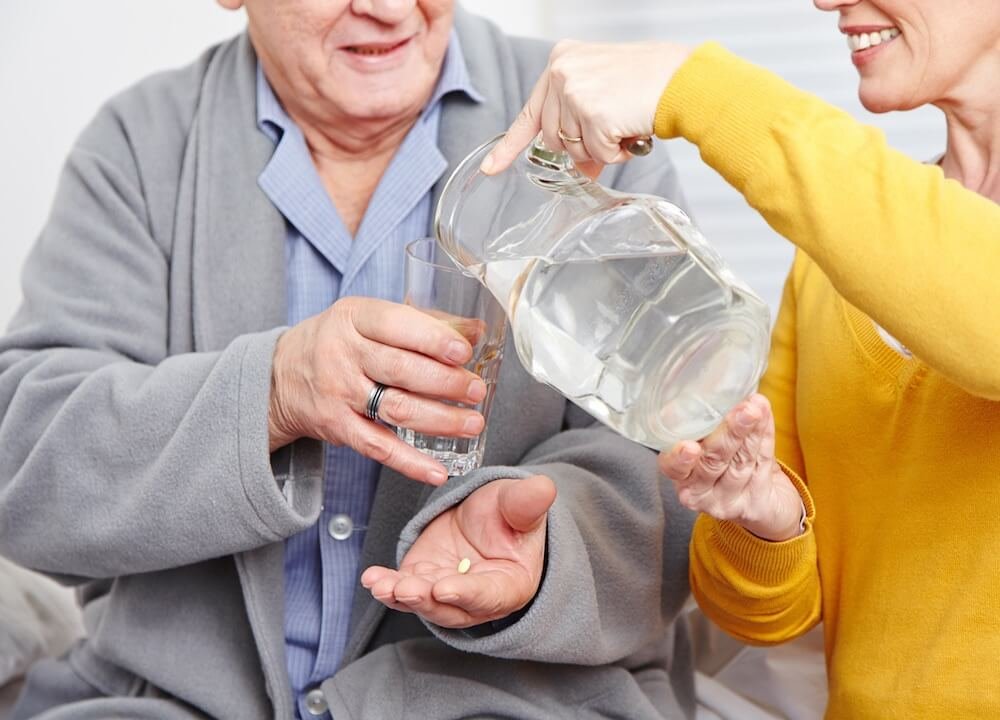
One of the most prolific issues amongst families who care for relatives with dementia is medication adherence.

In fact, recent studies have shown that people living with dementia only manage to take the correct dosage of their prescribed pills 11% of the time.

Furthermore, due to the complexity of dementia medication and the fact that many people living with dementia also suffer from a wide range of other medical conditions and behavioral issues, it is crucial that carers and patients alike are able to effectively manage their medication.

Fortunately, there is a simple solution to this problem, yet many families who are affected by dementia are unaware of it.

The dementia aid in question is the automated pill dispenser.

This product is specifically designed to assist people with Alzheimer’s and dementia, as well as those who are visually or mentally impaired, by reminding them to take their medication in a highly specialized and effective way.

With the ability to set up to 6 daily audio and visual alarms and a fully automatic lock, this handy device is perfect for helping dementia patients to feel in control of their medication and retain their sense of independence.

Furthermore, it gives carers peace of mind that their loved ones are not forgetting to take their dementia medication, providing one less element of dementia care for them to worry about.

You can also find several other medication management products for people with dementia including:

  • Vibrating alarms watches
  • Timers
  • Pill boxes of various sizes and capacities
  • Pill grinders

The power of physical activity

Everyone knows the importance of regular exercise for maintaining good physical health, yet not many are aware of the link between physical activity and brain health.

As a part of Age UK’s “Staying Sharp Series”, The Global Council on Brain Health (GCBH) examined the evidence around achieving a brain-healthy lifestyle including the beneficial effects of regular physical activity.

Help people with dementia remain independent

The results were clear. A physically active lifestyle, as in one that incorporates movement into daily activities, lowers the risk of decline in thinking skills as you age.

Furthermore, “purposeful” exercise, meaning exercise that involves moderate to vigorous exertion, results in beneficial changes in both brain structure and brain function.

What does this mean for people with dementia?

Fortunately, for those that have dementia and are already experiencing a decline in their cognitive skills, exercise can be beneficial too, helping to combat changes in the brain that are associated with this disease.

In terms of specific exercises, there are several activities that are suitable for people in the early or middle stages of dementia including:

Remember that activities such as these can not only help dementia patients to stay physically and mentally independent for longer, but they also encourage social interaction which is vital for their overall confidence and self-esteem.

Plus, it can help to lower their stress levels, and yours as a carer.

Making home modifications

making home modifications for dementia independence
In terms of practical steps that you can take to help your loved one with dementia retain their independence, making modifications to their home is arguably one of the most crucial.

The way in which their home is designed and laid out can have a massive impact on how someone with dementia is able to carry out daily tasks such as cooking, cleaning and even just getting around the home safely and with minimal effort.

Fortunately, as a carer or family member, there are several modifications that you can make to ensure your loved one is both comfortable and safe in their own home.

Improve lighting

If you are concerned about the risk of falls or confusion, it can be a good idea to evaluate the lighting in the home.

You want to avoid too many shadows and reflections and reduce glare where possible as all of these can cause disorientation in someone with dementia.

Try and embrace natural light where possible by leaving the curtains open all day, avoiding blinds and cutting back any overbearing trees or hedges in the garden that are blocking the windows.

In terms of technology, you could invest in some automatic light sensors that will instantly turn on the lights when someone walks past them.

Reduce noise

Excessive noise can be distressing for people with dementia, especially if they rely on a hearing aid. Therefore, you should try and eliminate unwanted sounds and background noise where possible.

For example, turn off the television or radio when no-one is watching it, put rugs down if you have wood or laminate flooring and pull the curtains closed in the evenings.

Use labeling

If you find your loved one often gets confused when navigating their way around their home, displaying clear labels or signs can be extremely effective.

When creating signs you should ensure that they are understandable, are accompanied by a corresponding image and that they contrast in terms of color with the background that they are placed on.

Make the flooring safe

Trips and falls are a real worry for carers with people living with dementia three times more likely to suffer a hip fracture when they fall.

Therefore, it is crucial that you ensure their flooring is as safe as possible.
Ways in which you can make flooring more secure include:

  • Avoiding rugs or mats that pose a tripping hazard
  • Avoiding shiny or reflective flooring
  • Choosing a color that contrasts with the walls

When carrying out any of the above modifications it is important to be mindful of your loved one, as people with dementia can become distressed by changes to their routine or home environment.

Try not to make too many changes at once and involve your relative in the process through active communication and addressing any of their worries or concerns.

If you would like more information on how to make your home dementia-friendly, the Alzheimer’s Society has created a handy booklet full of top tips that you can download online or request a copy to be sent to you in the post.

Take advantage of technology

In recent years dementia-related technology has come a long way with a plethora of helpful dementia aids that can help your loved one retain their independence.

Known as “assistive technology”, the below innovations will not only promote self-reliance in someone with dementia but will also help to keep them safe in their own home.

Dementia clocks

People with dementia can become easily confused concerning the time of day and often cannot determine between day and night.

Dementia clocks are a great way to help your loved one with their routine, providing a clear and simple way for them to distinguish the time.

There are many different types of dementia clocks available with some that show the day, date and time, some that depict day and night and others that simply show the day of the week for those in the later stages of dementia.

Hydration cups

Dehydration is a common problem in elderly people in general but it is even more of a concern in people with dementia.

There are several reasons why someone with dementia can become dehydrated including:

  • They forget to drink fluids or forget where they have left their drink
  • An inability or difficulty swallowing
  • An inability to communicate that they are thirsty
  • Medications that cause frequent urination
  • Limited mobility

hydration cups

Elderly people are recommended to drink 2-3 pints of water a day, which is equivalent to 6 cups of tea, yet people with dementia regularly do not drink this much leading to common signs of dehydration including nausea, headaches and persistent fatigue.

Thankfully, help is at hand in the form of hydration cups such as the Droplet.

Designed in the same shape as a mug or cup to allow users to enjoy a sense of normality, these cups work by alerting the owner when they have not drunk for a while using both subtle flashing lights and recorded audio messages.

Communication aids

One of the key factors in helping someone with dementia to remain independent is ensuring that they do not become cut off from the outside world.

As the disease progresses, many dementia patients will prefer the comfort and familiarity of their own home, but that doesn’t mean that they can’t still stay connected with their family and friends.

Adapted telephones are a dementia aid that provides a simple way for people to stay in contact with their loved ones, with the ability to pre-program their most frequently dialed numbers and larger buttons for ease of use.

You may also want to show your loved one how to use Skype and FaceTime so that they can video call any family members or friends who live too far away to visit frequently.

Other technological innovations for dementia patients you may want to look into include:

  • Location tracking devices
  • Personal alarms
  • Automated temperature, smoke and carbon monoxide detectors
  • Memo minders

The bottom line

Finding ways to help your loved one to retain their independence, confidence and self-esteem is vital both for their overall wellbeing and your own.

Nobody likes to admit it but being a carer to someone with dementia is hard work.

Of course, it can also be massively rewarding and helping your partner, parent or friend when they need it most is arguably one of the most meaningful things you ever do.

That being said, there is no shame in admitting that you need help.

Whether that involves utilizing the latest technology to help your loved one manage their own condition or using an automated product to take the pressure off of you, even if just concerning one daily task.

Be sure to keep the lines of communication open between yourself and the person you are caring for and focus on their abilities as their condition progresses.

Encourage them to participate as much as possible but don’t be afraid to step in when necessary.

Whether you live with someone with dementia such as a partner or spouse, or you help care for a parent who lives alone, helping them to keep their independence for as long as possible will result in them leading a happier, healthier and more stress-free life.

Art Therapy And Dementia Benefits

art therapy and dementia

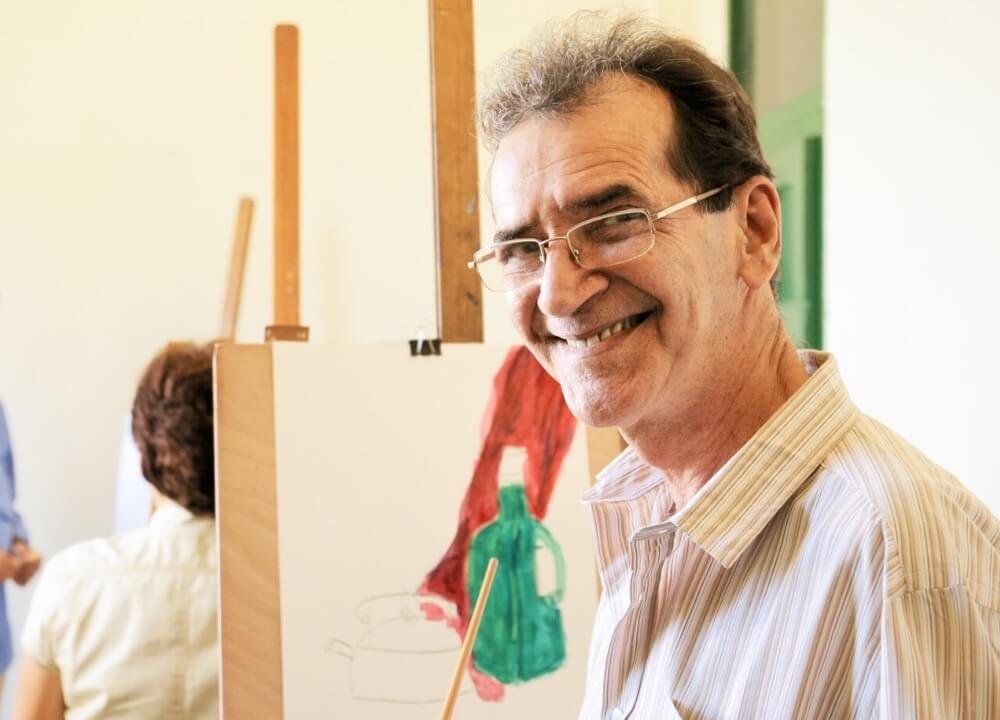
If you have dementia or know someone with the illness, you may be interested in the topic of art therapy and dementia.

British Association of Art Therapies defines art therapy as a type of psychotherapy that uses art media as its primary communication mode.

Persons who engage in art therapy do not need any skill or experience in art.

In most cases, a professional art therapist will steer the art therapy sessions. Their main aim is to help clients use art materials in a safe environment to grow and change on a personal level.

In the past, paintings and drawings have been categorized as a useful part of therapeutic processes within psychological and psychiatric specialties.

How does Art Therapy Help Dementia

Now that you have an idea of what art therapy is, let us get into some of the reasons persons with dementia will benefit from art therapy.

Art Therapy Stimulates the Brain

art therapy stimulates the brain
Art projects create an avenue where patients with dementia can express their creativity in a fun and relaxed manner.

Therefore, art therapy can stimulate the brain in different ways.

This can help to stir memories and at times it can even encourage speech. Some studies confirm that art therapy activities can help boost cognitive function in several areas of the brain.

This, in turn, helps to enhance the functions of the brain, communication, and social interactions.

Engages Individuals in a Myriad of Activities

engages individuals in a myriad of activities
When it comes to art therapy and dementia, ill persons get a chance to engage in tons of activities that can help create pleasant experiences and memorable moments.

Nowadays, art activities go beyond drawing on blackboards of papers.

Participants can enjoy other fun activities, like:

  • Using dough or clay for sculpting
  • Paint by numbers
  • Painting using watercolors
  • Pencil or charcoal drawing
  • Creating jewelry
  • Making cards
  • Being part of community art projects and much more

These art activities help relieve stress, stimulate senses, and boost hand strength.

Art therapy has a way of making somebody with dementia laugh, smile, move, or speak which is great especially when it comes from non-verbal seniors.

They can also create a sense of accomplishment and purpose as many persons usually feel proud and fulfilled after finishing one of their creations.

Improves Psychological and Behavioral Symptoms

improves psychological and behavioural symptoms
A high percentage of people with dementia will exhibit symptoms such as anger, restlessness, anxiety, depression, sadness, and other psychological and behavioral symptoms as the disease progresses.

Experts believe that when persons with dementia take part in art activities, it can help regulate mood and help them express themselves in a comfortable and safe environment.

Negative emotions are reduced significantly when someone with dementia takes part in artistic activities.

Additionally, impaired individuals can strengthen self-control through free-form creations which ultimately helps to improve their quality of life reducing incidences of psychological and behavioral symptoms.

This is another reason why it is important to look into art therapy and dementia seriously.

Enhances Social Skills and Communication

enhances social skills and communication
Through art therapy, caregivers understand the inner world of persons with dementia better, thus, improve communication with them.

In group settings, individuals with dementia get a chance to express themselves not only to the art therapist but their peers as well as helping improve their social skills.

This is because they can form good interpersonal relationships where they no longer have to suffer the negative consequences of social isolation.

Studies focusing on art therapy and dementia revealed that even those with severe dementia were able to strengthen their sense of belonging in a group after voluntarily engaging in coloring activities under caregiver guidance.

The individuals with the illness enhance their social skills by focusing more on eye contact and the exchange of body contact.

It is also common for patients with dementia to become more vocally active when they are participating in art topics they are familiar with.

This is because the topics may stimulate pleasant past memories which trigger their interest in specific art activities, hence promoting social skills and self-expression.

Helps Alleviate Caregiver Burden

helps alleviate caregiver burden
Taking care of people who have dementia is quite challenging. This is especially because there is no textual description of how the disease progresses. The condition will also not affect all persons identically.

Carers must, therefore, examine for subtle changes in the persons they are looking after when their communication abilities start to diminish.

With art therapy, caregivers can know the proper steps to take when offering care depending on how the individual behaves while engaging in various activities.

For instance, abrupt changes in art style may be an indication of further progression of the illness.

During group sessions, caregivers also get a chance to interact with each other where they can get emotional support as they share pointers on care experiences.

Closing Thoughts

It is undeniable that there are a lot of positive things that persons with dementia get when they participate in art therapy.

In addition to opening up a new effective communication channel as well as reduce negative emotions, art activities can also help strengthen and develop fine motor skills through hand and brain coordination.

Studies are also going on concerning the benefits of art therapy and dementia.

For your information, there are also many other alternative therapies for dementia that help with the patient’s condition.

Bed Sores in Elderly People With Dementia: Prevention & Treatment

Elderly person in bed at risk of developing pressure sores

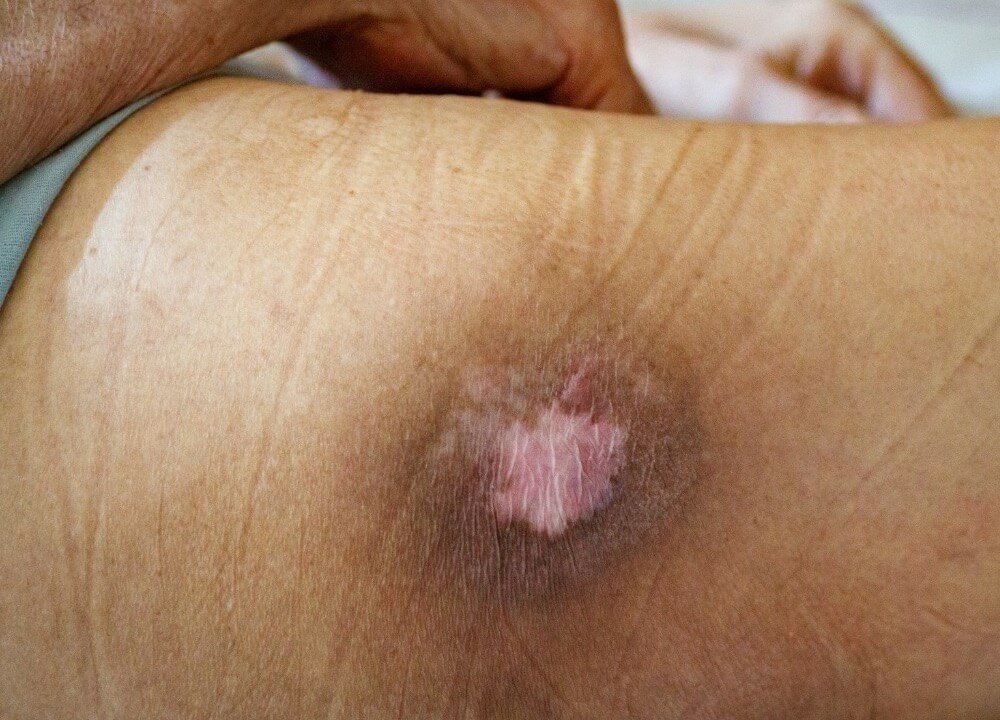
Bed sores in elderly people can become a serious health problem, particularly when dementia, reduced mobility, incontinence or poor nutrition make it difficult to protect the skin.

Bed sores are also known as pressure sores, pressure ulcers or pressure injuries. They develop when prolonged pressure, friction or shear damages the skin and the tissue underneath it.

People living with dementia may be especially vulnerable because they may have difficulty moving independently, communicating discomfort or understanding why they need to change position.

The good news is that many pressure injuries can be prevented. Early detection is also important because a small area of skin damage can become much more difficult to treat if pressure continues.

According to MedlinePlus, people who spend much of the day in bed or a chair, cannot reposition themselves, have incontinence or have reduced sensation are at increased risk of pressure injuries.

What Are Bed Sores?

bed sores in elderly people caused by prolonged pressure on the skin

A pressure injury develops when sustained pressure reduces blood flow to an area of skin and underlying tissue.

Without adequate blood flow, the tissue receives less oxygen and nutrients and can eventually become damaged.

Bed sores most often form over bony parts of the body where there is relatively little padding between the skin and bone.

Common locations include:

  • Heels
  • Ankles
  • Hips
  • Tailbone and sacrum
  • Elbows
  • Shoulder blades
  • Spine
  • Back or sides of the head
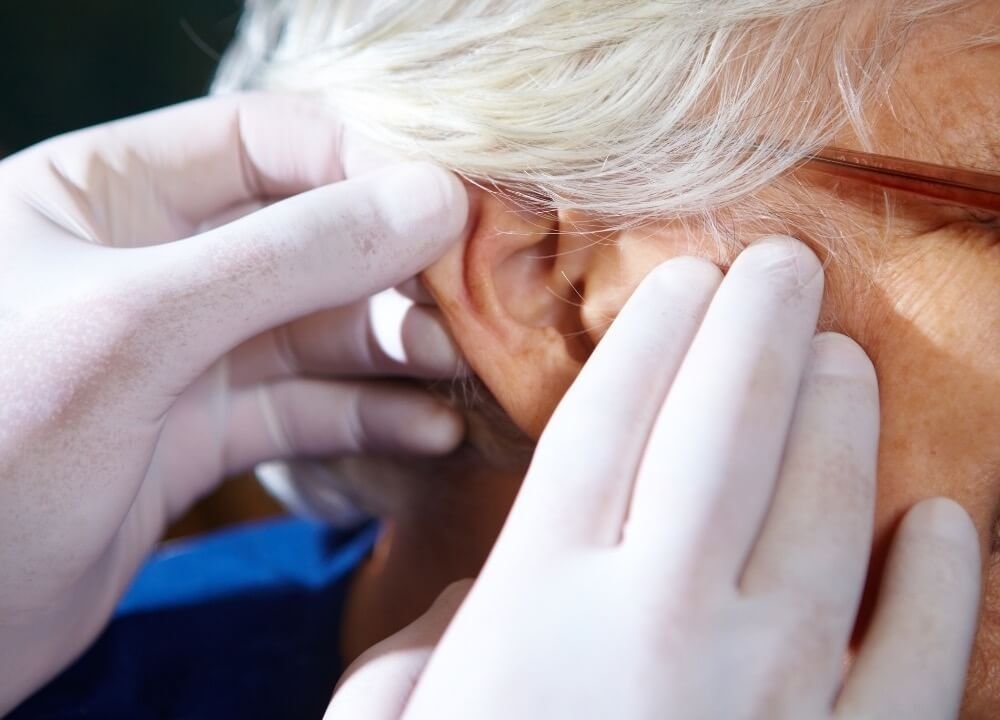
  • Ears

The Mayo Clinic explains that pressure injuries can develop over hours or days, particularly when someone cannot change position easily.

Why Are Bed Sores in Elderly People More Common?

Age alone does not cause a pressure injury, but older adults are more likely to have several risk factors at the same time.

These can include:

  • Reduced mobility
  • Fragile or thinner skin
  • Reduced circulation
  • Diabetes or vascular disease
  • Reduced sensation
  • Incontinence
  • Dehydration
  • Poor appetite or malnutrition
  • Being underweight or significantly overweight
  • Spending long periods in a bed, recliner or wheelchair
  • Previous pressure injuries

This is why preventing bed sores in elderly people usually requires looking at the person’s overall health, mobility, nutrition, continence and skin condition rather than focusing on one factor alone.

Why Dementia Can Increase the Risk of Bed Sores

older person with dementia needing help to prevent pressure injuries

Dementia can make pressure injury prevention more complicated.

A person may not recognize discomfort or remember that changing position can relieve pressure. Others may have difficulty communicating pain, particularly in later stages of dementia.

Some people may also become frightened or distressed when a caregiver tries to move them because they do not understand what is happening.

Rather than viewing this as the person being “non-compliant,” it can help to consider what may be causing the resistance.

Helpful approaches can include:

  • Explaining what you are going to do before touching or moving the person
  • Using a calm, reassuring tone
  • Moving slowly
  • Offering simple choices where possible
  • Watching facial expressions and body language for signs of pain
  • Trying again later if the situation is not urgent and the person is becoming distressed

See our guide to caring for someone with dementia for more strategies.

What Causes Pressure Injuries?

pressure friction shear moisture and immobility contributing to bed sores

Three mechanical forces play particularly important roles.

Pressure

Prolonged pressure between a bone and an external surface such as a mattress, chair or wheelchair can reduce blood flow to tissue.

The greater the pressure and the longer it continues, the greater the risk of tissue injury.

Friction

Friction occurs when skin rubs against bedding, clothing or another surface.

Fragile skin can be damaged more easily, especially when it is also damp.

Shear

Shear occurs when deeper tissues move while the skin remains relatively fixed.

A common example occurs when the head of a bed is raised and the person’s body gradually slides downward.

The skin may stay against the sheet while deeper tissue moves, placing stress on small blood vessels.

Moisture and Incontinence

Repeated exposure to urine, stool or perspiration can weaken the skin and increase the likelihood of damage.

This makes careful continence management particularly important for people living with dementia and incontinence.

Poor Nutrition and Hydration

Healthy skin and wound healing require adequate energy, protein, vitamins, minerals and fluid.

Unplanned weight loss, poor appetite and dehydration can therefore increase pressure-injury risk.

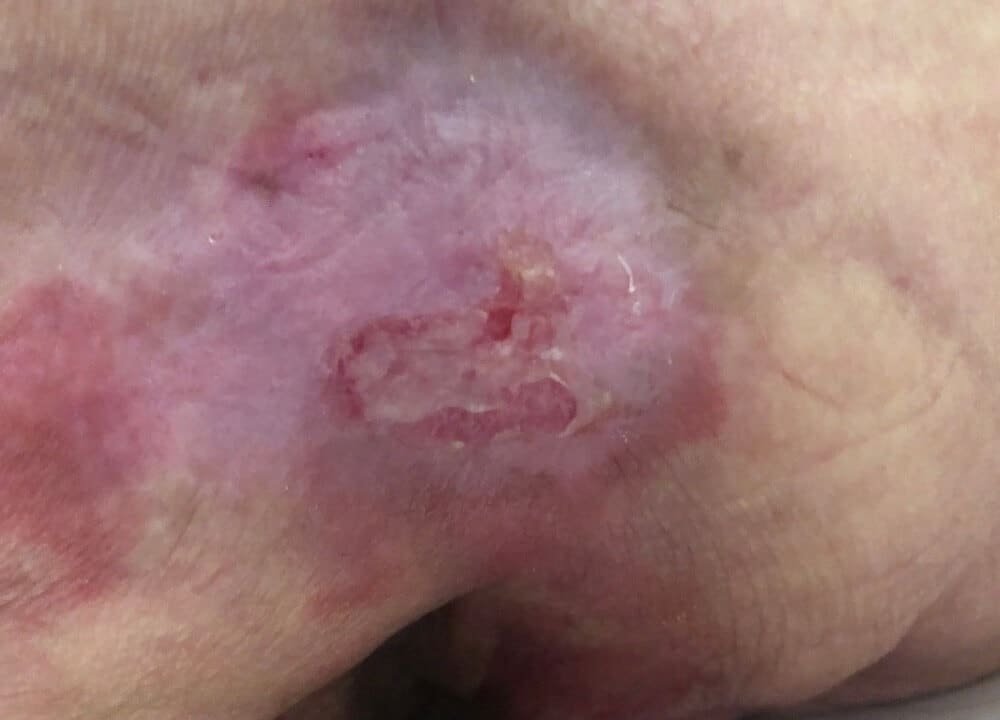
Warning Signs of a Pressure Injury

Early identification can prevent a minor problem from becoming a deeper wound.

Look for:

  • A persistent change in skin color
  • Redness that does not fade when pressure is removed
  • Dark red, maroon or purple discoloration
  • An area that feels warmer or cooler than nearby skin
  • Skin that feels unusually firm, soft or spongy
  • Swelling
  • Tenderness or pain
  • A blister
  • Broken skin
  • Drainage from a wound

Skin color changes may be harder to recognize in darker skin tones, so changes in temperature, firmness and texture are also important.

Any suspected pressure injury in a frail older adult should be assessed by a healthcare professional.

Stages of Pressure Injuries

stages of pressure injuries from stage 1 to stage 4

Healthcare professionals classify pressure injuries according to the depth and type of tissue damage.

The National Pressure Injury Advisory Panel (NPIAP) uses Stage 1 through Stage 4, together with unstageable pressure injury and deep tissue pressure injury.

Stage 1 Pressure Injury

The skin remains intact, but there is an area of persistent non-blanching redness or discoloration.

In darker skin, the color change may not look bright red. Differences in temperature, firmness or sensation may provide additional clues.

Stage 2 Pressure Injury

There is partial loss of the outer layers of skin.

The wound may look shallow and pink or red, or it may appear as an intact or ruptured blister.

Stage 3 Pressure Injury

There is full-thickness loss of skin, and fatty tissue beneath the skin may be visible.

The wound may extend deeper than it first appears and requires professional wound assessment and treatment.

Stage 4 Pressure Injury

There is full-thickness skin and tissue loss with deeper structures such as muscle, tendon, cartilage or bone exposed or directly palpable.

Stage 4 injuries are serious wounds requiring specialist medical care.

Unstageable Pressure Injury

Sometimes the bottom of a deep wound is covered by dead tissue or eschar, making it impossible to determine its true depth until a clinician can assess it properly.

Deep Tissue Pressure Injury

A deep tissue pressure injury may appear as persistent dark red, maroon or purple discoloration, or sometimes a blood-filled blister.

Damage can exist beneath apparently intact skin and may progress rapidly.

Do not try to determine the stage of a serious wound yourself. Accurate staging should be performed by a healthcare professional with appropriate wound-care training.

How Are Bed Sores in Elderly People Treated?

healing a pressure sore in an elderly person

Yes. Many pressure injuries can heal, particularly when they are identified early and the pressure that caused them is removed.

However, deeper pressure injuries may take weeks or months to heal and some may never heal completely.

The first priority is usually to relieve pressure from the affected area.

Professional treatment may also involve:

  • Assessment and measurement of the wound
  • Appropriate wound cleaning
  • Specialized dressings
  • Removal of dead tissue when medically appropriate
  • Pain management
  • Management of infection where present
  • Pressure-redistributing mattresses or cushions
  • Nutritional assessment
  • Management of underlying medical problems

The Mayo Clinic notes that treatment depends on the depth and severity of the wound and may involve a multidisciplinary healthcare team.

How to Prevent Bed Sores in Elderly People With Dementia

how to prevent bed sores in elderly people with dementia

Prevention should be individualized to the person’s mobility, health, skin condition and level of risk.

1. Reposition Regularly

People who cannot change position independently need assistance to relieve pressure.

There is no single repositioning schedule that is right for everyone.

The NPIAP recommends choosing repositioning frequency according to factors including the support surface, the person’s tolerance of pressure and individual preferences.

A 2024 NPIAP prevention protocol suggests repositioning people without independent bed mobility approximately every two to three hours where appropriate, but clinical circumstances can require a different schedule.

This is preferable to assuming that every person must automatically be turned exactly every two hours.

A nurse, doctor, wound-care specialist, occupational therapist or physical therapist can help develop an appropriate plan.

2. Use Pressure-Redistributing Surfaces

Specialized mattresses, overlays, wheelchair cushions and heel-offloading devices can reduce pressure on vulnerable areas.

The correct product depends on the person’s mobility, body size, skin condition, existing wounds and how much time they spend in bed or seated.

Avoid choosing equipment purely on the basis of advertising claims. Ask the healthcare team what type of support surface is appropriate.

3. Protect the Heels

Heels are particularly vulnerable because there is little soft tissue between the skin and bone.

For someone at high risk, a healthcare professional may recommend positioning or equipment that allows the heels to be completely offloaded from the mattress.

4. Keep Skin Clean and Dry

Clean the skin promptly after episodes of incontinence and dry it gently.

Barrier creams or other skin-protective products may be recommended when urine or stool repeatedly contacts the skin.

The NICE pressure-ulcer guideline recommends considering a barrier preparation for people at high risk of moisture-associated skin damage.

5. Reduce Friction and Shear

Avoid dragging a person across sheets when repositioning them.

Where possible, use appropriate lifting or transfer equipment and techniques.

Keeping bedding smooth and free from wrinkles and avoiding unnecessarily high elevation of the head of the bed can also reduce shear.

6. Check the Skin Every Day

For someone at high risk, check vulnerable areas regularly.

Pay particular attention to:

  • Heels
  • Ankles
  • Hips
  • Sacrum and tailbone
  • Elbows
  • Shoulder blades
  • Back of the head
  • Ears

Also check underneath or around medical devices such as oxygen tubing, braces and catheters where they contact the skin.

7. Support Nutrition and Hydration

A balanced diet and adequate fluid intake are important for maintaining healthy skin.

Someone with an existing pressure injury who is losing weight, eating poorly or showing signs of malnutrition may benefit from assessment by a dietitian.

NICE recommends nutritional assessment for adults who already have a pressure ulcer rather than automatically giving supplements to everyone.

Read more about nutrition and dementia.

8. Maintain Mobility Where Possible

Any safe movement can help reduce long periods of pressure in one location.

Depending on the person’s abilities, this might involve:

  • Standing with assistance
  • Short supervised walks
  • Transferring between a bed and chair
  • Changing sitting position
  • Physical therapy exercises

A physical therapist can advise on safe exercise and mobility for someone with dementia.

Bed Sores and Incontinence

Incontinence deserves particular attention because moisture and contact with urine or stool can damage already fragile skin.

Helpful measures can include:

  • Promptly changing wet or soiled continence products
  • Gentle cleansing after episodes of incontinence
  • Drying rather than rubbing the skin
  • Using a suitable barrier product when advised
  • Using absorbent products that wick moisture away from the skin
  • A person-centered toileting routine where practical

See our guide to incontinence products for people with dementia.

Signs a Pressure Sore May Be Infected

infection and sepsis warning signs from a pressure sore

Bed sores in elderly people can become infected, particularly when a wound is deep or difficult to keep clean.

Seek prompt medical advice if there is:

  • Increasing redness, discoloration, warmth or swelling
  • Pus or increased drainage
  • A bad smell from the wound
  • Increasing pain
  • Fever
  • Rapid deterioration of the wound

People with dementia may not be able to describe pain or feeling unwell clearly, so caregivers should also watch for sudden changes in behavior, alertness, appetite or mobility.

Sepsis Is a Medical Emergency

A serious wound infection can sometimes lead to sepsis.

Sepsis is the body’s extreme response to an infection and can become life-threatening very quickly.

The Centers for Disease Control and Prevention advises seeking immediate medical care when sepsis is suspected.

Warning signs can include:

  • New confusion or disorientation
  • Shortness of breath
  • Fever, shivering or feeling unusually cold
  • Clammy or sweaty skin
  • Extreme pain or discomfort
  • A fast heart rate or weak pulse

If someone with a pressure injury becomes suddenly very unwell, seek urgent medical care.

When Should You Contact a Healthcare Professional?

Contact a healthcare professional if you notice a new area of persistent redness, discoloration, broken skin or another suspected pressure injury.

Medical assessment is particularly important when:

  • The skin has broken down
  • The wound is deep
  • There is dark purple or maroon discoloration
  • There is drainage or a bad smell
  • The person has diabetes or poor circulation
  • The injury is worsening
  • The person is in significant pain
  • There are signs of infection

More advanced pressure injuries generally require professional wound care rather than home treatment alone.

Bed Sores in Elderly People: The Bottom Line

Bed sores in elderly people are common when mobility, skin health, nutrition or continence are compromised, and dementia can make prevention and treatment more challenging.

The most useful strategy is prevention: reduce prolonged pressure, help the person reposition, keep skin clean and dry, support nutrition and hydration, use appropriate pressure-relieving equipment and inspect vulnerable skin regularly.

If a pressure injury develops, getting professional advice early can make treatment easier and reduce the risk of the wound becoming deeper or infected.

For someone with dementia, care should also remain person-centered. Pain, fear and confusion may affect how the person responds to wound care and repositioning, so gentle communication and an individualized plan are important.

Related Articles

Dementia and Pain

Dementia and Incontinence

Dehydration and Dementia

Dementia and Weight Loss

Quality of Life and Dementia

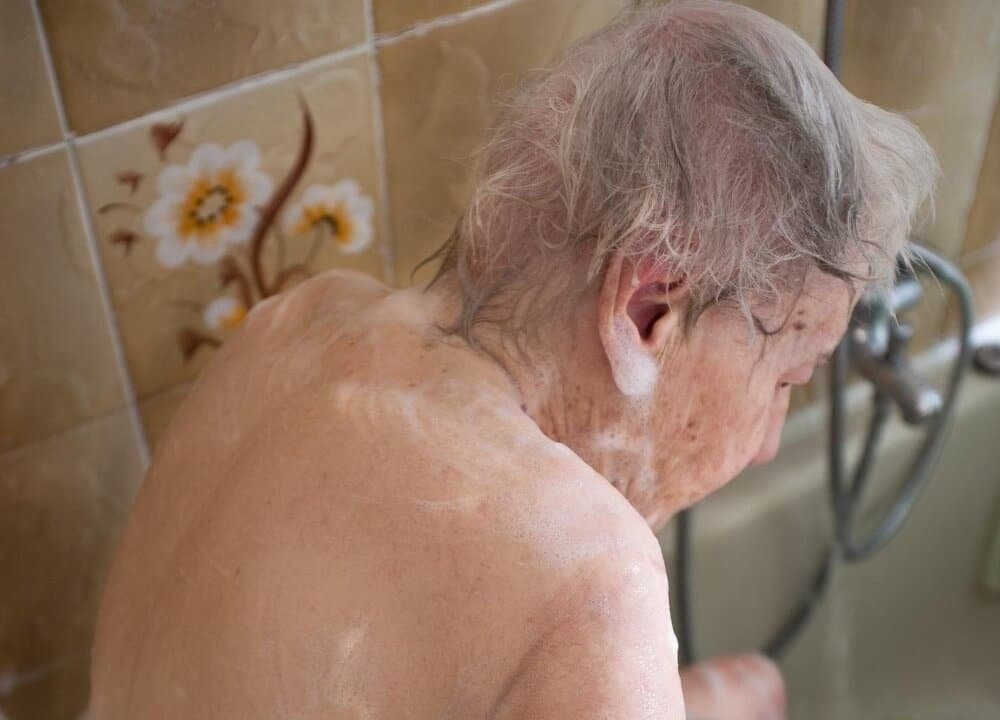
Dementia and Bathing: Best Practices for Caregivers

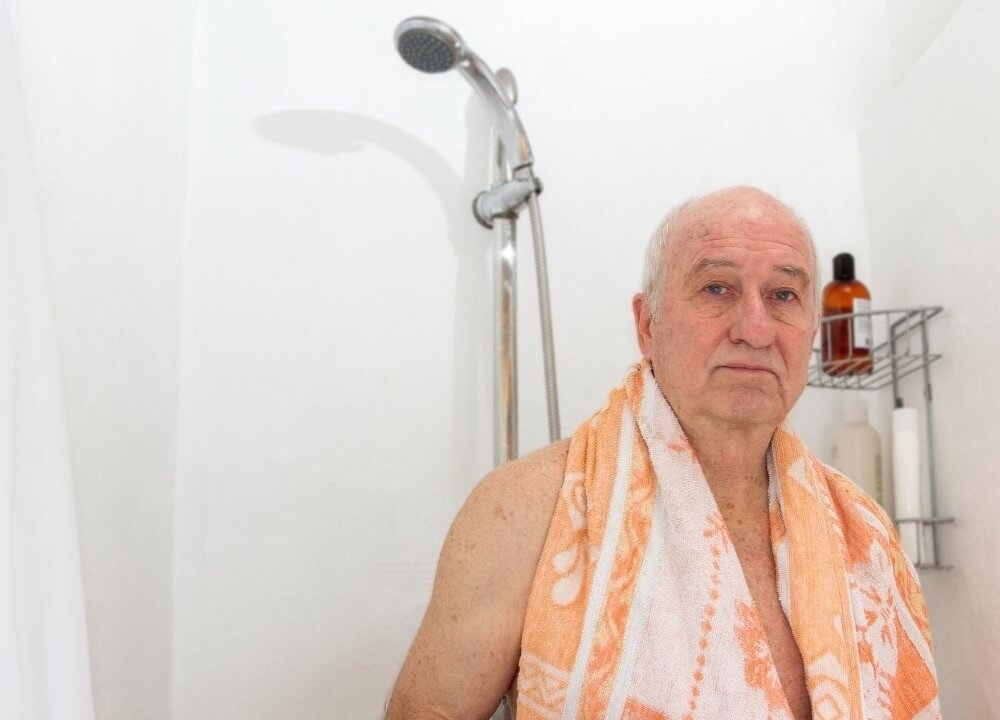
Dementia and bathing

Dementia and bathing can become challenging for both the person living with dementia and the person helping them.

Someone who previously enjoyed a daily shower may suddenly resist bathing, become frightened, insist they have already washed or become upset when another person tries to help.

This does not necessarily mean they are being difficult.

Pain, fear, embarrassment, changes in perception, confusion and difficulty understanding the steps involved in bathing can all contribute.

The goal is not simply to get someone into a bath or shower. It is to meet their hygiene needs while protecting their comfort, dignity and sense of control.

In this guide, we look at why people with dementia may resist bathing, practical ways caregivers can help and alternatives when a traditional bath or shower is not working.

Dementia and Bathing: Why Resistance Happens

There are many reasons people with dementia may resist bathing. Often, several factors occur at the same time.

dementia and bathing resistance

Understanding what is causing the resistance is one of the most important steps.

A person may not be able to explain what is wrong, so caregivers sometimes need to look for clues.

Physical Discomfort

Bathing may simply feel physically unpleasant.

Possible causes include:

  • The bathroom is too cold or too hot.
  • The water temperature is uncomfortable.
  • The person is experiencing pain.
  • Standing in the shower is tiring.
  • They feel unsteady or frightened of falling.
  • Water hitting sensitive skin feels unpleasant.
  • They dislike water running over their face or head.
  • Dry or irritated skin makes washing uncomfortable.

If resistance appears suddenly, consider whether pain, illness, an injury or another physical problem could be contributing.

Fear and Emotional Discomfort

Bathing is a very personal activity.

Someone who has needed help for the first time may feel embarrassed, exposed or frightened.

Possible reasons include:

  • They feel uncomfortable undressing in front of another person.
  • They are embarrassed about needing assistance.
  • They are frightened of stepping into the shower or bath.
  • Water near their face causes anxiety.
  • They do not understand why another person is touching them.
  • The experience reminds them of an upsetting event from the past.

The Alzheimer’s Association notes that people living with dementia may experience bathing as frightening, embarrassing or physically uncomfortable and may communicate this by resisting assistance.

Read the Alzheimer’s Association guidance on bathing.

Changes in Vision and Perception

Dementia can affect how a person interprets what they see.

For example:

  • A dark bath mat may appear to be a hole.
  • A drain may look threatening.
  • Reflections in mirrors may be confusing.
  • A shiny wet floor may appear unsafe.
  • Poor contrast between the bath, floor and walls can make it difficult to judge depth.

Good lighting, visual contrast and removing unnecessary reflections may therefore make the bathroom easier to understand.

Changes in Thinking and Memory

Cognitive changes can also explain problems with dementia and bathing.

The person may:

  • believe they have already showered
  • forget when they last washed
  • no longer understand why bathing is necessary
  • have difficulty sequencing the steps involved
  • forget how taps, showers or toiletries work
  • not understand why another person is trying to help them
  • become overwhelmed by too many instructions at once

Rather than arguing with the person, it is usually more productive to adapt the environment and the way assistance is offered.

How Often Should Someone With Dementia Bathe?

how often should someone with dementia bathe

There is no single bathing schedule that suits everyone.

The National Institute on Aging suggests that a bath or shower two or three times per week may be sufficient for many people with Alzheimer’s disease, while allowing flexibility according to the person’s needs.

National Institute on Aging: Bathing, Dressing and Grooming.

On other days, areas such as the face, hands, feet, underarms and genital area can be washed as needed.

Skin condition, continence, mobility, activity level, personal preferences and medical needs should all be considered.

Older people often have fragile or dry skin, so more bathing is not always better.

If you are unsure about an appropriate bathing schedule because of a person’s health or skin condition, discuss it with their doctor or nurse.

When a Person With Dementia Refuses to Bathe

When someone refuses a bath or shower, forcing the issue can increase fear and make the next attempt even harder.

Instead, try to work out what the person is communicating through their resistance.

They may be cold, frightened, tired, embarrassed or simply unable to understand what is happening.

Sometimes the best response is to stop, allow the person to settle and try again later.

The Alzheimer’s Association recommends adapting bathing expectations when necessary and considering alternatives such as sponge bathing.

See their dementia bathing recommendations.

Suggested Products to Assist Bathing People With Dementia

ProductFeaturesAvailable on Amazon
Dove Body Love Beauty Bar SoapDove Body Love Beauty Bar Soap Dry-Cracked SkinHypoallergenic fragrance
Instant dryness relief
Dermatologist approved
Hydration
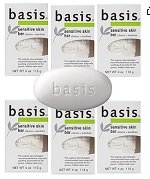
Sensitive Skin Bar SoapBasis Sensitive Skin Bar Soap - Cleans and Soothes with Chamomile and Aloe VeraBody wash or hand soap
No fragrances
No dyes
Rinses easily
Rince Free Bath SpongesNurture Valley Sponge Bath Wipes - Large Disposable Wash Cloths for Adults, Seniors, Bedridden, Home CareNo rinsing
Disposable sponge wipes
Bath with no soap
Ultra thick


Sliding Shower ChairCarousel Sliding Shower Chair Tub Transfer Bench with Swivel SeatPremium padded Pivoting arms
Adjustable space saving design
Professional grade
Robust
Bath Bench Seat SuspendedBath Bench Seat Suspended, Bath Tub Shower ChairHeavy duty alloy
Adjustable
Comfortable
Lightweight
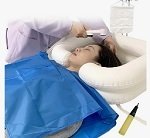
Inflatable Bedside Shampoo Basin kitInflatable Bedside Shampoo Basin kit, Bedridden Shower System for Disabled& Elderly High quality PVC
Holds 2.5 gallons of water
Set of 6
Easy and comfortable

Dementia and Bathing: Practical Caregiver Strategies

dementia and bathing caregiver strategies

Small changes can make a surprisingly large difference.

Prepare Everything Beforehand

Have towels, clean clothing, soap, shampoo, washcloths and anything else you need ready before starting.

A person with dementia may become distressed if they are left waiting while someone searches for supplies.

Warm the bathroom first if necessary and check the water temperature.

Protect Privacy and Dignity

Being undressed in front of another person can be uncomfortable at any age.

Keep the person covered with towels wherever possible and expose only the area being washed.

Explain what you are doing before you do it.

Allow the person to wash as much of their own body as they safely can.

Dementia Australia recommends encouraging the person to continue doing as much of their own personal care as possible.

Dementia Australia: Hygiene and personal care.

Keep Instructions Simple

A complete instruction such as “go and have a shower” can involve many individual tasks.

Instead, break the activity into small steps.

For example:

  • “Here is your towel.”
  • “Let’s take off your shoes.”
  • “Step in here.”
  • “Here is the washcloth.”
  • “Wash your arm.”

Give one instruction at a time and allow plenty of time for the person to respond.

Offer Simple Choices

Choice can help preserve a sense of control.

Instead of asking a broad question such as “Do you want to have a shower?”, try offering two acceptable options.

For example:

  • “Would you like a shower now or after breakfast?”
  • “Would you prefer a bath or a shower?”
  • “Would you like the blue towel or the white towel?”

Too many choices can be confusing, so keep them simple.

Use Familiar Routines

Think about the person’s lifelong habits.

Did they normally shower in the morning?

Did they always prefer an evening bath?

Were they accustomed to washing their hair separately?

Where possible, preserve familiar routines rather than imposing a completely new one.

Choose the Best Time of Day

best time of day for dementia and bathing

Many people with dementia function better at particular times of the day.

If the person is calmer and more alert during the morning, this may be a better time for bathing.

Others may be more relaxed after breakfast or later in the afternoon.

Observe the person’s normal pattern and work with it.

Watch Your Tone and Body Language

If you approach bathing expecting a battle, your tension may be noticeable.

Use a calm voice, relaxed body language and simple reassurance.

Avoid arguing about whether the person needs a bath.

The aim is cooperation, not winning an argument.

Consider Who Is Helping

Some people feel more comfortable receiving intimate personal care from someone of the same sex.

Others cooperate better with a particular family member or familiar professional caregiver.

If one approach consistently causes distress, consider whether another trusted person might have more success.

Consistency can also help. A familiar caregiver may become easier to accept over time.

Use Music or Conversation

Familiar music can sometimes make bathing feel less clinical and provide a pleasant distraction.

Talking about familiar people, places or interests can also shift attention away from the washing process.

Maintain Safety

Bathroom safety becomes increasingly important as dementia progresses.

Consider:

  • grab rails
  • a shower chair or bath seat
  • non-slip surfaces
  • good lighting
  • removing loose mats that may cause trips
  • testing the water temperature
  • keeping necessary supplies within reach

Never leave someone who requires supervision alone in a bath or shower.

Alternative Bathing Options for Dementia

alternative options

A traditional shower or bath is not the only way to maintain hygiene.

If standard dementia and bathing routines are causing repeated distress, alternative methods can be very useful.

Sponge Bath

A warm washcloth and basin can provide effective cleaning without requiring the person to get into a shower or bath.

Wash one area at a time and keep the rest of the body warm and covered.

A no-rinse cleanser can also be useful.

Partial Bathing

It is not always necessary to wash the entire body at once.

You can divide personal care across several days.

For example:

  • hands and arms
  • face and neck
  • underarms and torso
  • legs and feet
  • hair
  • perineal care as required

This approach can be particularly helpful for someone who becomes overwhelmed easily.

Bed Bath

For someone who is bedbound or has limited mobility, washing in bed may be safer and more comfortable.

Use warm water, washcloths and towels and keep the person covered as much as possible.

People with complex medical or mobility needs may benefit from assistance from a trained professional caregiver.

Towel Bath

A towel bath uses warm, damp towels or washcloths while the person remains covered and warm.

This may be less frightening than getting into a bath or shower.

No-Rinse Cleansers

No-rinse body cleansers and shampoos can be useful when access to water is difficult or traditional bathing causes distress.

They can also be useful between full baths or showers.

Follow the manufacturer’s instructions and stop using any product that irritates the person’s skin.

Personal Care, Toileting and Incontinence

People experiencing incontinence may require more frequent cleaning of the genital and surrounding areas.

Good hygiene helps reduce discomfort and skin irritation.

If the person can wash themselves safely, provide warm washcloths and allow as much independence as possible.

If assistance is needed, explain what you are doing, preserve privacy and work gently.

Persistent redness, broken skin, pain, unusual discharge or signs of infection should be assessed by a healthcare professional.

How to Overcome Resistance to Dementia and Bathing

how to overcome resistance with dementia and bathing

When bathing repeatedly becomes difficult, work through the problem systematically.

  1. Look for the cause. Is the person cold, frightened, embarrassed, tired or in pain?
  2. Reframe the goal. The goal is good hygiene and comfort, not necessarily a conventional shower.
  3. Choose the right time. Try bathing when the person is normally calmest and most alert.
  4. Prepare the environment. Warm the room, gather supplies and reduce unnecessary noise or distractions.
  5. Protect dignity. Keep the person covered and encourage independence wherever possible.
  6. Try one change at a time. Different water temperature, another caregiver, a sponge bath or music may completely change the experience.
  7. Be flexible. What works today may not work next week as dementia progresses.

When to Seek Medical Advice

A sudden change in willingness to bathe deserves attention.

Sometimes what appears to be behavioural resistance is actually caused by pain or another health problem.

Speak with a doctor or other healthcare professional if you notice:

  • sudden or unexplained changes in behaviour
  • new pain during movement or washing
  • skin infections, rashes or sores
  • significant changes in mobility
  • persistent distress during personal care
  • a sudden increase in confusion
  • concerns about the person’s ability to remain safe in the bathroom

A healthcare professional may also be able to recommend occupational therapy, home-care support or bathroom modifications.

Closing Thoughts on Dementia and Bathing

There is no perfect bathing routine for every person living with dementia.

The approach that works best will depend on the person’s personality, history, health, stage of dementia, physical abilities and lifelong habits.

Some people continue enjoying showers for many years. Others may increasingly prefer sponge bathing, partial washing or assistance from a familiar caregiver.

The most important principles are comfort, cleanliness, safety, dignity and flexibility.

When dementia and bathing become difficult, try to understand the reason behind the resistance rather than viewing the refusal itself as the problem.

Often, a small change in timing, language, environment or bathing method can turn a stressful experience into a much calmer one.

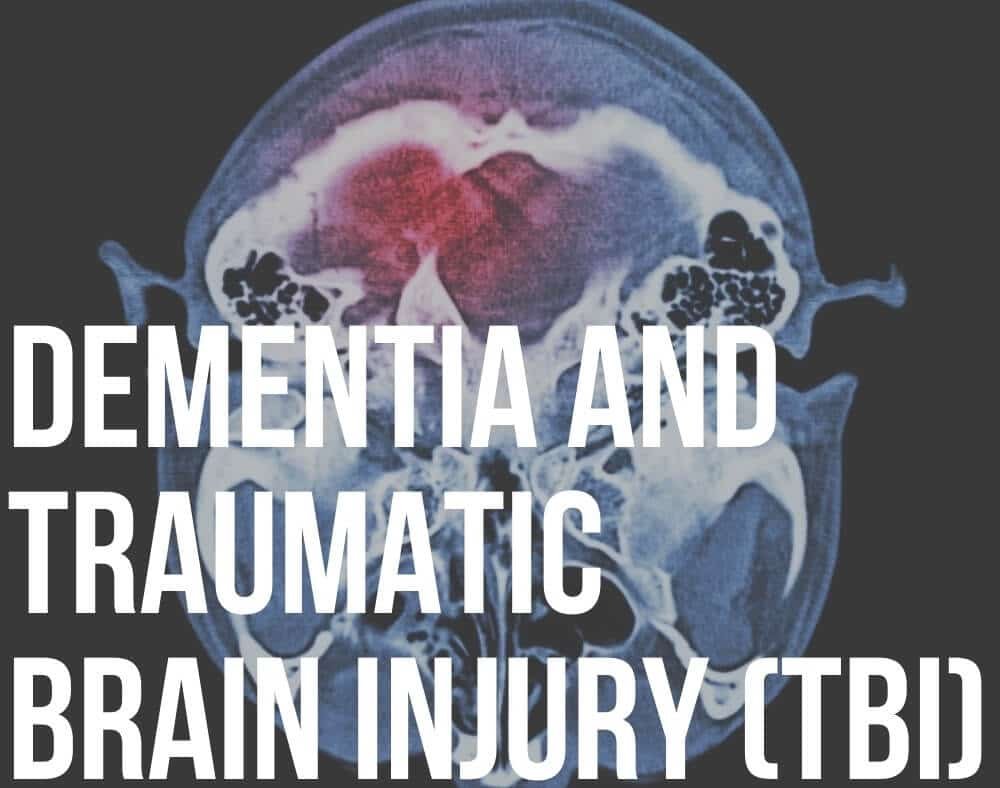
Dementia and Traumatic Brain Injury (TBI)

dementia and traumatic brain injury (TBI)

The potential between increased risk of dementia and traumatic brain injury has become a pressing issue as scientists try to find the link between the two.

This is mostly because the immediate effects of head injury can include symptoms that are similar to those of dementia.

These include signs such as memory loss, confusion, and changes in speech, personality, and vision.

Relationship Between Dementia and Traumatic Brain Injury

Depending on the severity of the head injury the symptoms can clear up fast, last a long time, or fail to go away altogether.

Keep in mind that symptoms a person experiences after an injury usually do not become worse over time which is usually the case with dementia.

Dementia affects about 47 million people worldwide and we expect the numbers to double in the next two decades.

Over 50 million people across the globe experience traumatic brain injury yearly.

Causes of TBI

causes of TBI
This usually occurs when external forced disrupt the normal functions of the brain. Leading causes of TBI include falls, assaults, and motor vehicle accidents.

Research, however, notes that certain types of head injuries may increase the risk of someone developing different types of dementia.

Two primary factors seemingly affecting a person’s risk include the severity of the injury and the age when the injury happened.

Some studies suggest that more severe head injuries might increase the risk of developing Alzheimer’s disease (AD) which is one of the most common causes of dementia.

The risk also increases for persons who experience head injuries when they are older say 55 years and above.

Repeated mild injuries also increase the risk of having problems with reasoning and thinking in the future.

Brain injuries after 55 are risky

dementia and traumatic brain injury
Check out essential details of a study that has been done to try and figure out the link between the risk of dementia and traumatic brain injury.

One of the larger studies reported that the risk of dementia as well as that of Alzheimer’s is significantly higher in persons who have experienced TBI than in those who have no history of traumatic brain injury.

The study that was conducted in Denmark observed almost 2.8 million participants and they began in 1977.

The large study population involved a 36-year follow-up where researchers gained access to a uniform healthcare system that tracks the severity and numbers of traumatic brain injuries.

Among the millions of participants, the research indicated that 4.7% have at least one diagnosis of traumatic brain injury.

With the first TBI diagnosis, 85% had been categorized as mild while the rest were characterized as a skull fracture or severe. 4.5% of the persons who were 50 years and above developed dementia from 1999 to 2013.

From this group, 5.3% had experienced at least one TBI when the scientists were conducting their observations.

The average age at first dementia diagnosis was recorded as 80.7 years. The findings of this research were published in The Lancet Psychiatry on 10th April.

Dementia risk is higher in those with TBI history

The experts in the study concluded that the overall dementia risk in people with a history of TBI was 24% higher than those who did not have a history of traumatic brain injury.

They reached this conclusion after accounting for other risk factors of the neurodegenerative disease.

Severe traumatic brain injuries accounted for an increased risk of 35% while mild TBI increased the risk by 17%.

Men also have a slightly higher increased risk of dementia development when compared to women with traumatic brain injury histories at 30% versus 19%.

Jesse Fann the lead author of the study and a professor of behavioral sciences and psychiatry at the University of Washington School of medicine said that the relationship between the risk of dementia and the number of brain injuries was very clear according to the research.

Men are more likely to develop dementia after TBI

men are more likely to develop dementia after TBI
The study also indicated that the risk of dementia also increased based on the number of traumatic brain injuries.

Five or more TBIs increased the risk by 183%, four TBIs increased dementia risk by 51%, while the risk increased by 33% for two or three TBIs.

Fann also explained that if someone had a brain injury in their 20’s chances of developing dementia increased by 60% in their 50s.

The researchers nonetheless clarified that the findings of the study do not suggest that everyone who sustains traumatic brain injury will end up developing dementia in his or her later years.

Fann hoped that the findings will help people with histories of TBI to change their behaviors towards other dementia risk factors.

This includes quitting or limiting the use of tobacco and alcohol consumption, taking part in regular physical exercise, treating illnesses like depression, diabetes, and hypertension, as well as avoiding obesity.

He also suggested that people who have suffered traumatic brain injury need to get an evaluation from medical doctors to get immediate treatment for any persisting issues.

Fann stated that some cognitive rehabilitation strategies might help decrease cognitive deficits that relate to brain injury.

Not everyone with traumatic brain injury will develop dementia

not everyone with traumatic brain injury will develop dementia
Co-author Jakob Christensen an associate professor of neurology at Aarhus University Hospital in Denmark stated that severe traumatic brain injury is more prevalent in young people.

He went ahead to explain that there is a concern that this also increases the risk of developing dementia in younger people.

Fann warned children and parents to be aware of the risks of traumatic brain injury that contact sports present.

The authors of the study recommended heightened efforts to prevent TBIs, especially for the younger generation.

They said that strategies need to be put in place to ameliorate the impact and risk of dementia relating to traumatic brain injury.

Conclusion

Many studies looking into the relationship between increased risk of dementia and traumatic brain injury are targeting participants of contact sports such as hockey, football, boxing, and soccer as well as military veterans.

These are people who end up experiencing traumatic brain injuries in their line of work.

The researchers acknowledged that more research is still needed to find out who is at the greatest risk of developing dementia as well as other factors that contribute to this risk.

Is There A Connection Between Dementia And Concussion?

dementia and concussion

Dementia researchers for a long time have been fascinated by the potential link between the risk of developing dementia after a concussion.

Mayo Clinic defines a concussion as a traumatic brain injury that affects the functions of the brain.

Its effects are normally temporary and can include headaches as well as problems with memory, coordination, balance, and concentration.

Can a Concussion Make Dementia Worse?

Blows to the head or violently shaking the upper body and head are the main causes of concussions.

In short, any severe head injury can lead to a concussion.

There is a very high chance that people will experience a concussion after falling or a motor accident.

Concussions are also common for people who play sports like soccer or football, as well as boxing.

Alzheimer’s Association describes dementia as a general term for loss of memory, problem-solving, language, and other thinking abilities.

It ends up affecting an individual’s daily life.
Many people with concussions usually recover fully.

New research, however, shows that there may be a link between increased risk of dementia development for people who have experienced concussions.

Some Studies Support The Increased Risk After Concussion

Does Dementia Risk Increase After a Concussion?
Several studies are supporting the idea that the risk of dementia can be increased by concussions.

One of the studies published in JAMA Neurology in May 2018 suggests that having a concussion can lead to increased dementia risk even when the person did not experience loss of consciousness.

The study was conducted by a team at UCSF (University of California).

There were over 350,000 participants in the study whose average age was 49. The researchers followed the participants for about 4.2 years.

The researchers also discovered that concussion without loss of consciousness accounted for a 2.4 fold in dementia increased risk.

When the concussion resulted in a loss of consciousness the risk of dementia increased up to 2.5 times higher.

The risk was higher for persons who experienced a moderate-to-severe traumatic injury almost four times (3.77).

The study also acknowledged that concussions in the general population were also risky for dementia and not for veterans alone. They draw the participants from two databases.

One of them has a list of all-era veterans who experienced concussions during military or civilian life.
The other has vets serving war zones meaning most of their injuries occurred in combat zones for example for shockwaves in blasts.

Concussions are risky for people with dementia

concussions are risky for people with dementia
The findings were similar in both groups.

This indicated that concussions happening in combat areas are as likely linked to the development of dementia as those affecting the general population according to Deborah Barnes the first author Ph.D., MPH, professor in UCSF psychiatry, epidemiology and biostatistics department.

The experts advised people who experienced concussions to seek medical attention. Also, to allow time to heal as well as try and avoid other concussions.

Although the research did not examine the issue of repeat concussions directly, there is growing evidence that it may result in a cumulative effect.

Different research from Boston University Medical Centre also concludes that there is a link between concussions and Alzheimer’s disease (AD).

Note, AD is one of the most common causes of dementia.

The experts on the study concluded that concussions speed up cognitive decline and brain atrophy that relates to Alzheimer’s especially in persons who are at genetic risk for the medical condition. You can find these findings in the Brain journal.

The researchers observed 160 Afghanistan and Iraq war veterans.

Among them were participants who had suffered one or more concussions and others who had never had a concussion.

Concussions and genetics are crucial

concussions and genetics are crucial
The professionals used MRI imaging to study the thickness of the participant’s cerebral cortex in regions that first show atrophy in AD.

They found that those who experienced a concussion had lower cortical thickness in the regions of the brain that are first affected by Alzheimer’s.

Their results suggest that concussions when combined with genetic factors may play a role in accelerating memory decline and cortical thickness in AD’s relevant areas.

The experts on the study hope that other researchers will build-up on their findings to discover the concussion-related mechanisms that increase the development of neurodegenerative diseases like Alzheimer’s, Parkinson’s and others.

As a result, treatment may target the mechanisms which might lead to delaying the onset of neurodegenerative pathology.

Dementia and Concussion Closing Remarks

Currently, experts do not know the long-term effects that concussions cause.

More ‘dementia and concussion’ research is still necessary to determine whether concussions cause dementia development in later years.

Bright Light Therapy and Dementia

bright light therapy and dementia

When looking into new treatments for persons with dementia, bright light therapy and dementia is one of the topics currently getting a lot of attention.

Standford Health Care explains that bright light therapy is one of the treatments used to manage circadian rhythm disorders.

What is Light Therapy for Dementia?

Originally, it was intended for persons who were suffering from SAD (seasonal affective disorder).

According to Sleep Education, the human body has an internal clock that signals it when it is time to be awake, and when it’s time to sleep.

We find the clock in the SCN, an area of brain above the section where nerves travel to the eyes.

This clock is responsible for controlling a person’s “circadian rhythm.” The rhythms include the daily cycle of numerous hormones, alertness, and temperature.

“Circadian” implies to occur in a 24-hour cycle.

Circadian rhythm sleep disorder is common with dementia

circadian rhythm sleep disorder is common with dementia
We should mention that circadian rhythms make a person alert or sleepy at regular times daily.

It is common for persons with dementia to experience circadian rhythm sleep disorder.

Dementia refers to a group of progressive neurological symptoms and conditions that are characterized by an ongoing decline in a person’s cognitive abilities including thinking, memory, behavior, and communication.

It usually ends up affecting a person’s abilities to participate in daily living activities.

This implies that they can benefit from light therapy that can help shift sleeping patterns into what is considered normal.

Check out some of the benefits of bright light therapy for persons with dementia below.

Benefits of Bright Light Therapy

benefits of bright light therapy
In regards to bright light therapy and dementia, experts state that light therapy can help individuals with dementia.

The therapy aims to affect brain chemicals that are linked to sleep and mood.

Most people with dementia may experience sleep issues at some point in the illness.

This is because dementia can destroy the area of the brain that is responsible for the wake-sleep cycle.

A well-conducted but small study revealed promising effects on disturbed sleep as well as restlessness for individuals with dementia.

Another study showed that bright light therapy administered in the morning can help treat sleep disorders in persons with dementia.

According to this study, this is the time the therapy entertains circadian rhythm to reduce interference with the sleep-wake cycle.

Yet another research measuring the combination of walking and bright light therapy reported significant improvements in sleeping habits when bright light therapy and walking were practiced every day.

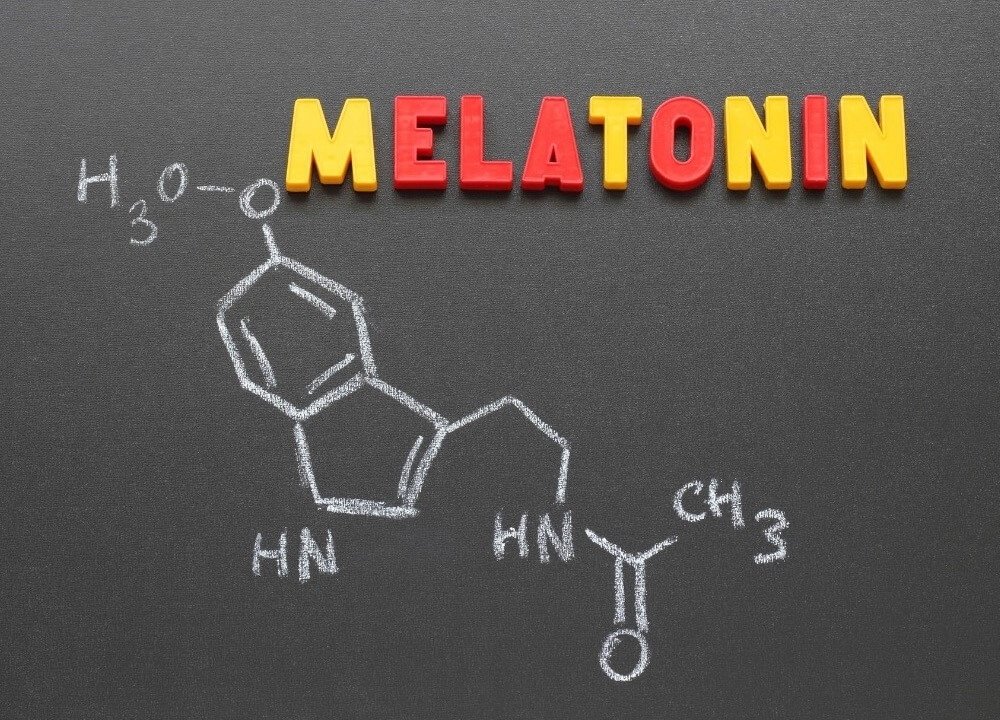
Combination of melatonin and dementia

combination of melatonin and dementia
Some researchers also looking into bright light therapy and dementia also studied the combination of the use of melatonin with bright light therapy.

The experts observed that all the participants who had dementia experienced better sleep cycles after exposure to bright light therapy.

Interestingly, the results were not similar after combining melatonin and bright light therapy.

A larger, well-conducted research review reported that bright light therapy can help reduce sleeping during the daytime and increase night-time sleeping.

Multiple other studies also showed that bright light therapy can be used to normalize the wake-sleep pattern.

Additionally, light therapy also has the potential to treat aggressive behavior in persons with dementia.

Some studies also state that bright light therapy can help reduce depression in people who have dementia.

Note that depression is one of the most common symptoms of dementia.

Other perks that persons with dementia can get from bright light therapy include:

Reduced Wandering

Some research indicates that bright light therapy in addition to enhancing the sleep-wake cycle also helps to reduce wandering for people with dementia at night.

Enhanced Cognition

Bright light therapy has also been associated with better scores on the Mini-Mental State Exam. This is one of the most common tests for measuring cognitive abilities.

Persons with vascular dementia or Alzheimer’s disease (AD) were subjected to bright light therapy and they ended up demonstrating improved scores on their cognitive abilities tests.

This was in comparison to no changes in the scores when the same group was exposed to dim light therapy.

A similar study reported better cognitive functioning after exposure to bright light therapy. However, this was for people with early-stage AD as opposed to those with middle or late-stage Alzheimer’s.

Improved Behavioral Functioning

One study reported participants with dementia showcased improvement in various challenging behaviors.

However, another study compared levels of agitation of individuals with dementia after exposure to light therapy and stated that there was no difference.

How is Bright Light Therapy Administered?

When it comes to bright light therapy and dementia, the person with the illness sits in front of a lightbox that offers around 5-30 times more light than what the average office light emits. In most cases, the lightbox will emit about 10,000 lux of light.

This happens for a set time daily.

Keep in mind that it is important to consult a physician before starting light therapy. This is because there are a few cases where the therapy may not be appropriate.

Incorporating Light Therapy into the Routine of a Person with Dementia

incorporating light therapy into the routine of a person with dementia
There are times when it may not be easy to incorporate light therapy into the routine of a person with dementia.

Below are a few case scenarios you may be presented with, in regards to using bright light therapy and dementia and how you can solve them.

  • When a person becomes agitated in front of the lightbox, you may want to use verbal reassurance. If this does not work end the session and gradually introduce it until they become used to it.
  • Sometimes, an individual with this progressive illness does not want to sit in front of the light. In this instance, you can try focusing their attention on you. Start a pleasant conversation and hold their hands so that they can feel comfortable during the session.
  • When a person is easily distracted try and schedule the therapy when they are having breakfast. This will help speed up the process of becoming part of their routine.

Closing Remarks

Although some studies confirm that bright light therapy is beneficial to some people with dementia more studies focusing on bright light therapy and dementia still need to be conducted.

This will help to offer more conclusive results so that medics, caregivers, and persons with the illness can know how light therapy will benefit them.

Why Do Dementia Patients Eat So Much? Causes and Helpful Tips

Why do dementia patients eat so much

Why do dementia patients eat so much? There are several possible reasons, including memory loss, changes in appetite and food preferences, anxiety about when the next meal will be, and changes in the parts of the brain that regulate behavior.

Some people with dementia may eat very little, while others may ask for food repeatedly or eat much more than they did previously.

A person may simply forget that they have recently eaten. Others may develop strong preferences for sweet or strongly flavored foods, eat the same foods repeatedly, or become preoccupied with food.

These changes are particularly associated with some forms of dementia, including behavioral variant frontotemporal dementia (bvFTD).

In this article, we look at why overeating can occur, what caregivers can do to help, and when a change in eating habits should be discussed with a healthcare professional.

Why Do Dementia Patients Eat So Much?

There is no single explanation for overeating in dementia.

According to the Alzheimer’s Society, some people with dementia may eat too much or too often because they have forgotten that they recently ate or because they are worried about when their next meal will be.

Dementia can also affect judgment, impulse control, memory, routine and a person’s experience of taste and flavor.

The precise cause will vary from one person to another.

1. Why Do Dementia Patients Eat So Much When They Forget Meals?

why do dementia patients eat so much when they forget recent meals

Memory loss is one of the most straightforward explanations.

A person may finish breakfast and, a short time later, have no memory of eating it.

They may ask when breakfast is being served, look for snacks or prepare another meal because, from their perspective, they genuinely believe they have not eaten.

Some people may also become anxious about food and repeatedly ask when the next meal will be.

Rather than arguing that they have already eaten, reassurance and a predictable meal routine may be more helpful.

2. Frontotemporal Dementia and Compulsive Eating

why do dementia patients eat so much with frontotemporal dementia

Changes in eating behavior can be particularly noticeable in behavioral variant frontotemporal dementia, often abbreviated to bvFTD.

The UCSF Memory and Aging Center notes that overeating is common in bvFTD. Some people develop food fads, repeatedly seek particular foods or develop a strong preference for sweet foods.

This happens because bvFTD affects areas of the brain involved in judgment, inhibition and behavior.

The person may have difficulty controlling the urge to eat even when they are physically full.

For some families, this can become one of the more challenging behavioral symptoms to manage.

3. Changes in Taste and Food Preferences

Dementia can change a person’s relationship with food.

Someone who previously preferred savory meals may suddenly want sweet foods. Another person may begin wanting stronger flavors or eating the same food repeatedly.

The Alzheimer’s Society explains that dementia can affect how much and when someone eats, as well as the foods and flavors they prefer.

Changes in smell, taste and perception can also occur with aging and dementia.

For more information, see our article about food cravings and dementia.

4. Habit, Boredom, Anxiety or Comfort Eating

Eating is not always driven by physical hunger.

A person may repeatedly look for food because they are bored, lonely, restless or anxious.

Food can also become part of a repetitive routine. For example, someone may walk into the kitchen every time they pass it and automatically look for something to eat.

Providing enjoyable activities for a person with dementia, companionship and a predictable daily routine may sometimes reduce repeated food seeking.

The goal is not to stop someone enjoying food, but to understand what may be driving the behavior.

5. Difficulty Recognizing Hunger and Fullness

Dementia can affect the brain’s ability to interpret information and regulate behavior.

Some people may have difficulty recognizing whether they are hungry or full. They may continue eating simply because food remains available.

Others may eat quickly or repeatedly without realizing how much they have consumed.

This is another reason why changes in eating behavior should be considered in the context of the person’s overall dementia symptoms rather than treated simply as a lack of self-control.

6. Medication or Another Health Condition

Not every change in appetite is caused by dementia.

A new medication, medication dose change, diabetes, depression, anxiety, sleep problems and other medical conditions can affect appetite or eating behavior.

A sudden or substantial change in appetite deserves medical attention, particularly if it is accompanied by rapid weight gain or loss, excessive thirst, changes in urination, pain, constipation, difficulty swallowing or other new symptoms.

A doctor can review medications and look for other possible causes.

7. Eating Things That Are Not Food

Occasionally, a person with dementia may attempt to eat items that are not food because they no longer recognize what the object is or what it is used for.

This behavior requires particular attention because items may be toxic, sharp or pose a choking hazard.

If a person repeatedly attempts to eat non-food items, discuss it with their healthcare professional and make potentially dangerous objects less accessible.

How Can You Manage Overeating in Dementia?

practical ways to manage overeating in dementia

When asking why do dementia patients eat so much, it is important to first work out what is driving the behavior.

The most appropriate response to someone who has forgotten breakfast may be different from the response needed for compulsive eating associated with frontotemporal dementia.

Some strategies that may help include:

  • Maintain a predictable meal routine: Regular meals and snacks can provide reassurance about when food will next be available.
  • Avoid arguing: If the person says they have not eaten, repeatedly correcting them may create unnecessary frustration. Reassurance or distraction may work better.
  • Offer nutritious snacks: Fruit, yogurt, vegetables or other appropriate snacks can be kept available if the person frequently wants something to eat.
  • Serve a normal portion in stages: If someone frequently asks for another serving, part of the meal can sometimes be held back and offered a little later.
  • Encourage fluids: Regular access to drinks is important because dehydration is common in older adults and people with dementia.
  • Reduce visual triggers if necessary: If compulsive food seeking is causing a significant health or safety problem, keeping large quantities of tempting foods out of immediate sight may help.
  • Provide meaningful activities: Walking, gardening, music, household activities or social interaction may help when boredom or repetitive behavior contributes to constant food seeking.
  • Keep familiar foods available: Dementia can make unfamiliar meals confusing. Familiar foods may make mealtimes calmer and more enjoyable.

For people with frontotemporal dementia and severe compulsive eating, the National Institute on Aging suggests that caregivers may sometimes need to supervise eating, limit food choices or modify access to food as part of managing behavioral symptoms.

Any restriction should be proportionate to the person’s health and safety needs and preserve their dignity as much as possible.

Healthy Eating Still Matters

healthy eating and nutrition for a person with dementia

A person with dementia does not require a special “dementia diet.”

The Alzheimer’s Association recommends a varied diet that includes vegetables, fruit, whole grains, dairy or suitable alternatives, and sources of protein.

The person’s individual health, weight, medical conditions, medications and nutritional needs should also be considered.

This is particularly important because not everyone with dementia needs to eat less. Many people, especially in later stages, have the opposite problem and may lose weight or struggle to eat enough.

You can read more about this in our related article, Why Do Dementia Patients Stop Eating?

When Should You Speak to a Doctor or Dietitian?

when overeating in dementia may need medical advice

It is worth seeking professional advice if the change in eating behavior is sudden, severe or difficult to manage.

Speak with a healthcare professional if the person:

  • gains or loses a significant amount of weight
  • develops a sudden major increase or decrease in appetite
  • regularly eats until they feel unwell
  • tries to eat non-food items
  • has difficulty chewing or swallowing
  • coughs or chokes while eating
  • has recently started or changed medication
  • has symptoms that could suggest another medical condition
  • eats such a restricted range of foods that nutritional deficiencies are a concern

A doctor can look for medical causes and review medications.

A registered dietitian can also help develop an eating plan if weight gain, weight loss or a very restricted diet is becoming a problem.

Closing Thoughts

There are several possible answers to the question, why do dementia patients eat so much.

For some people, memory loss means they simply forget that they have already eaten. Others become anxious about the next meal, develop new food preferences or use food for comfort or stimulation.

In behavioral variant frontotemporal dementia, overeating and compulsive food seeking can be a particularly prominent symptom.

Rather than assuming the person is simply choosing to overeat, look for the reason behind the behavior.

A predictable routine, nutritious food choices, reassurance, appropriate activities and professional advice when needed can make eating easier to manage while still allowing the person to enjoy food and mealtimes.

References and Further Reading

Alzheimer’s Society. Appetite and dementia.

Alzheimer’s Society. Changes in eating habits and food preference.

Alzheimer’s Association. Food and Eating.

UCSF Memory and Aging Center. Behavioral Variant Frontotemporal Dementia.

National Institute on Aging. How Are Frontotemporal Disorders Treated and Managed?

Viewing Nature Improves Dementia [Proven]

viewing nature improves dementia

Now, to be clear, viewing nature will not cure dementia. There are still no cures for most causes of dementia. But is there evidence that viewing nature improves dementia?

But what improves dementia’s symptoms improves dementia.

Science has proven time and again that viewing images of nature improves many factors that worsen dementia’s distressing symptoms.

Factors like pain, anxiety, depression and stress all impact dementia profoundly.

The Importance of Getting Outside, Nature & Dementia

These types of excess disabilities make it harder for people with dementia to function at their best. They can increase confusion, agitation, restlessness and impact sleep.

Unfortunately, when any one of these things falls out of balance it will often disrupt the others as well.

if someone feels anxious it can impact their sleep

For example, if someone feels anxious it can impact their sleep.

  • When sleep is disturbed, fatigue increases.
  • As fatigue increases, the ability to think, function and process information decreases.
  • This can easily lead to an increase in anxiety, agitated behavior and/or restlessness.
  • Restlessness can contribute to falls, injuries and pain.
  • Pain can lead to more restlessness, sleep disturbance, medication, anxiety and greater fall risk.
  • Medication can lead to constipation which can lead to increased restlessness, sleep disturbance, agitation, anxiety and appetite loss.
  • Appetite loss can lead to weight loss, weakness, decreased functioning and falls.

Symptoms can quickly spiral out of control and it can be hard to untangle the causes from the effects.

To the extent possible, a key goal in dementia care is to reduce “causes” and minimize effects.

So, when science shows us that viewing plants and scenes of nature can alleviate pain, anxiety, depression and stress we can see how this will effectively improve the symptoms of dementia – although more accurately we’re reducing excess disabilities that worsen dementia’s symptoms thereby allowing the person to function closer to their true baseline capability.

Hospitals are great places to study pain, stress and anxiety

hospitals are great places to study pain stress and anxiety
Hospital patients, with their detailed records and controlled experience, are great fodder for study.

Hospital stays and procedures are known to be stressful, and contribute to anxiety. This makes them a great way to study the effects of plants on health outcomes, and there is no shortage of such studies.

View Through a Window May Influence Recovery from Surgery

One of the most cited studies occurred in1984 when Roger Ulrich examined whether the view through the window made a difference to the recovery of post-surgical patients.

Some rooms in the hospital overlooked a grove of trees, while others overlooked a brick wall. The rooms were nearly identical other than the view.

Patients went through the same gallbladder surgery and were matched on multiple factors, including age, gender, and health status.

The findings showed a statistically significant difference in:

1. The frequency and strength of pain medication required

The tree-view group required significantly less, and less potent, pain medication than the control group.

2. Length of hospital stay

The tree-view group was able to leave the hospital an average of a full day earlier than the brick wall-view group.

3. Fewer “negative” experiences

Nurse notes were reviewed for all patients. The group with the brick wall-view had over 3 times as many negative notes (such as “upset and crying” or “needs much encouragement” than the tree-view group who had more positive notes (like “In good spirits” and “moving well”).

Since 1984, thousands of studies have built on and expanded Dr. Ulrich’s research into an enormous body of research.

Although it wouldn’t be possible to cover them all here, we can take a closer look at a sampling of key studies.

Measuring the Benefits of Indoor Plants and Flowers

measuring the benefits of indoor plants and flowers

Live plants enhance health outcomes of patients recovering from surgery

In 2009, this study showed that post-surgical patients in hospital rooms with plants and flowers had a significantly improved physiological recovery response and felt better about their rooms and the hospital staff caring for them.

90 patients recovering from the same hemorrhoid surgery were randomly assigned to similar rooms either with or without live plants.

Researchers measured patients’ vital signs, length of hospital stay, pain medication used, ratings of pain intensity, distress, anxiety and fatigue.

They found that patients in rooms with live plants showed significantly lower systolic blood pressure, and less pain, stress, anxiety and fatigue than the control group.

They also rated their room satisfaction higher and reported more positive impressions of the hospital care staff.

Live plants enhance recovery and mood; reduce pain, anxiety and fatigue

This study in 2016 shows multiple benefits of live plants to post-surgical patients’ mood and recovery.

Patients in rooms with plants reported less pain, anxiety and fatigue than those in the control group.

They also were noted to have increased mood, social activity, friendly behavior towards others, and positive feelings in general.

They described their rooms to be more calming, soothing and satisfying than the control group.

There are hundreds of more studies showing similar effects of plants and flowers on health, stress, anxiety, pain and mood.

A number of studies examine the effect of simply viewing fresh-cut flowers or live plants in a room.

Viewing fresh flowers invokes relaxation and improves mood

Researchers in 2014 confirmed physiological and psychological relaxing effects of cut fresh roses in a room.

This study from 2016 also confirmed that the presence of flowers can positively influence mood as well as perceptions of places and other people.

In another study in 2017 researchers measured a significant relaxation response after participants viewed fresh roses for three minutes. The control group viewed no stimulus.

The physiological and psychological relaxation response was determined by measuring participants’ oxyhemoglobin levels, heart rate and heart rate variability.

A mood profile and semantic differential were also used, which showed a significant elevation in mood and an increase in feeling ‘natural’, ‘comfortable’ and ‘relaxed ’.

And, in case you had any doubt: receiving flowers is actually scientifically proven to enhance mood! It also enhances both social behavior and memory.

Receiving flowers improves mood, social behavior and memory

A series of studies in 2005, showed that people benefit in multiple ways from receiving flowers. People were presented with either flowers or a non-flower gift such as pens, candles or fruit.

The control gifts all had the same economic value, a pleasant odor, similar color variation and were wrapped similarly for presentation.

The results showed that that both women and men, young and old, showed improved mood, positive social behaviors and episodic memory after receiving flowers.

The social behaviors that were measured included initiation of conversations, eye contact, and standing at a more familiar social proximity. Non-flower gifts elicited less or no improvement in these areas.

These improvements were measured both immediately and weeks later, demonstrating a lasting effect on mood, social behavior and memory.

Live plants induce relaxation

In 2016, researchers studied men performing the same task – transferring pots for three minutes – with and without plants present. When live plants were present, the participants relaxed.

This was determined by significant differences in key physiological and psychological measurements, such as prefrontal cortex activity, heart rate variability and mood profile.

Images of Nature on Screens are also Effective

images of nature on screens are also effective

Viewing nature imagery on a screens induces relaxation and positive emotional response

In 2007, researchers found that individuals felt significantly less stressed, more friendly, playful and elated, and less fearful after viewing slide images of nature rather than urban scenes.

In 2018, researchers found significant evidence that viewing forest imagery induces physiological and psychological relaxation. Participants viewed images of either a forest landscape or a cityscape on a high definition television set.

After viewing forest imagery, participants’ oxyhemoglobin levels were decreased and they reported feeling much more “comfortable”, “relaxed” and “natural”.

Awe-inspiring images of nature can be especially potent

In 2014, researchers investigated whether there was any effect, or difference in effect, on people viewing mundane pictures of nature versus awe-inspiring scenes.

Images were shown on a computer screen and were grouped into three categories: awesome nature (such as grand mountain scenes or powerful storms), mundane nature (like grass, foliage or trees) and a control group (featuring objects like buckets, ladders or chairs).

Both types of nature images invoked significantly more feelings of being connected to others, feeling more caring and more spiritual than the control condition.

Both groups of nature images invoked an improved mood, more marked in the awesome images. The awesome images also lead to participants making more prosocial choices.

Photographs and Paintings of Nature can Reduce Stress and Improve Attention

photographs and paintings of nature can reduce stress and improve attention

Exposure to natural landscape art reduces anger and stress in males

A study in 2008 showed a significant reduction in anger and stress in males (but not females) when nature landscape art posters were displayed versus abstract art posters.

Participants were asked to perform frustrating tasks on a computer and then report their anger and stress levels.

In the natural landscape settings, the males in the experiment reported less stress and anger – the more natural landscapes were present, the less stress and anger was reported.

Viewing plants, or pictures of plants, reduces stress

In 2012, researchers found that people who viewed real plants and those who viewed images of plants experienced a reduction in stress as compared to the control group, which viewed none.

Viewing pictures of nature improves attention

In 2013, this study showed that viewing pictures of nature significantly improved executive attention in both older and younger adults, as opposed to pictures of urban scenes.

Viewing photos of natural scenery reduces impulsivity

In 2014, researchers concluded that exposure to photographs depicting natural scenery decreased impulsive decision making as compared to viewing photos of a cityscape.

Other Interesting Studies

Virtual reality nature experiences offer relaxation and stress relief

In 2019, researchers studied the effects of seven different simulated forest environments on stress relief and relaxation.

All the virtual reality environments proved to offer relaxing and stress-relieving effects.

The environment which included a prominent water feature was noted to be an especially powerful stress reliever.

Ceilings with sky images may support healthier dreaming and circadian rhythm

This 2014 study examined which differences in brain activity as measured by magnetic resonance imaging would be noted in hospital rooms with traditional ceilings and identical rooms which had sky images painted on the ceilings.

The rooms with sky compositions activated regions of the brain associated with spatial cognition, circadian rhythm, perceived motion and dreaming.

The plain-ceiling rooms activated regions related to facial processing and potential visual hallucinations.

Nature and Daylight Improves Mood and Reduces Stress

This 2018 study established positive effects of exposure to nature and daylight throughout everyday life on one’s mood and level of stress.

Viewing natural scenery promotes relaxation and enhances mood

In 2015, this study added to the body of evidence that seeing a natural forest landscape in person produced physiological and psychological relaxation and enhanced mood as compared to viewing an urban landscape.

Looking at a garden relieves stress and improves verbalization and memory in dementia

In 2018, researchers found that simply seeing a garden relieved physiological stress and improved verbalization and memory in people with advanced dementia.

The Conclusions are Clear: Viewing Images of Nature Improves Dementia

viewing images of nature improves dementia
Study after study has added to the body of evidence: seeing plants or images of nature offers substantial benefits to people with dementia.

Whether it’s a photograph, a television program, a view through a window or seeing it live and in person, viewing nature is an effective way to enhance the quality of life for people with dementia.

It can reduce pain, anxiety and stress, promote relaxation, improve mood and enhance mental functioning in many ways.

Adding live plants or images of nature into the environment for someone with dementia is an effective, and low-cost way to help them function at their best.

Dementia And Spicy Foods: Are They Related?

dementia and spicy foods

With the progression of dementia, taste buds weaken, making patients develop strange food cravings, even for extremely spicy foods. But is dementia and spicy foods linked increasing dementia risk?

Are Dementia And Spicy Foods Linked?

The prevalence of dementia is on the rise and numbers are expected to double every 20 years.

It appears when your brain suffers from neurological problems leading to loss of memory and poor judgment.

The decline in memory deteriorates the quality of life in the elderly and, in the long term, reduces cognitive function.

The effects of dementia, and problems happening concurrently with it, are extensive. Moreover, they do not affect the brain only.

Scientists have observed significant alterations in dietary behaviors of people suffering from dementia.

These range from the changes in appetite to unusual food cravings.

How Does Dementia Affect Eating Habits?

how does dementia affect eating habits
Dementia leads to various metabolic and psychological changes in the body. These, coupled with the weakened taste buds, change dietary preferences.

During a research study conducted by the Medical research council, the caregivers of dementia sufferers pointed out a preference for foods that are strong and savory in flavor.

Some of the eating patterns in people with dementia are:

  • Over-eating
  • Binge-eating
  • Decreased appetite
  • Changes in food choices
  • Pica (craving for inappropriate foods)
  • Pica (craving for non-food items e.g. mud)
  • High consumption of sugary and spicy foods

Do People With Dementia Crave Spicy Foods?

do-people with dementia crave spicy foods
The unusual food cravings vary from person to person. Some people crave sweet foods while others incline towards spicy or salty foods.

The reason why the elderly with dementia crave spicy foods are as follows:

1. Dementia Weakens The Taste Buds

The craving is due to the disappearance of taste buds with the progression of the disease.

Humans can identify salty, sweet, sour, bitter, and umami taste.

However, dementia sufferers lose this ability with time. Dementia makes them unable to identify a particular taste as well as differentiate between two different flavors.

This is due to the loss of nerve endings in the tongue.

Since dementia appears with morbid brain conditions, it diminishes the neurological sense responsible for taste.

The elderly cannot feel the tanginess of food so, they ask for a stronger flavor. The same is true for salty foods.

2. Capsaicin Releases Endorphins

Ever wonder why spicy food burns tongue? It is due to the active ingredient present in chili, called capsaicin.

Capsaicin instigates pain receptors in the mouth and tongue, causing a burning sensation.

Due to the activation of these receptors, the brain translates it as a painful experience and floods the body with endorphins.

These are responsible for elevating mood and reducing the painful sensation.

Additionally, dopamine is released which is involved in the reward system of the brain. The result is a euphoric state called “runner’s high”.

Since such neurotransmitters are low in quantity in dementia patients, the body creates a compensatory mechanism.

It generates cravings for foods that cause endorphins to rush.

Is There Any Cultural Relation To Cravings of Spicy Foods?

is dementia and spicy foods linked
Food choices vary immensely throughout the world.

This is also true for the condiments used to prepare local cuisine.

Predictably, the taste buds of natives of each region are adapted to the flavors of their local food seasonings.

Asians consume far more chili and spicy herbs in their meals as compared to westerns.

Therefore, experts think dementia sufferers from the Asian region are more likely to indulge in binge-eating spicy foods.

In such regions, the population develops a habit of using strong spices.

So, they misunderstand their lack of sense of taste in dementia as a bland and flavorless meal.

This results in an excessive intake of chili among the old age population.

Although it is more prominent in areas where spicy cuisine is widespread, westerns are also prone to such cravings.

Their chili usage is minimal but hot sauces and other herbs are still popular in Caucasians and western ethnicities. The proportion may be far lesser but they often enjoy pickles and jalapenos.

A study done in the UK showed that 15% of participants reported a likeness for spicy foods frequently after the onset of dementia.

Do Spicy Foods Increase The Incidence Of Dementia?

do spicy foods increase the incidence of dementia
High spicy food intake may not be as harmful as excessive use of sweets, but it has a deeper relationship with the cause.

Scientists think that chili consumption is linked with an increased risk of dementia.

In Asia, chili is the most frequently used spice. In some regions of China, one in every three adults consumes chili daily.

It has many beneficial impacts on obesity and hypertension due to the presence of capsaicin in it. But there is more to the story.

Considering these properties, capsaicin should reduce the oxidative burden of the brain and enhance cognitive function but evidence proves the opposite.

People who consume more than 50g of chili per day experience a reduction in cognitive function.

The findings also suggested:

  • Twice the risk of self-reported poor memory
  • 56% increase in the incidence of memory decline
  • The low global cognitive score for cognitive function
  • A decline in memory co-efficient with each 10g increase in chili intake
  • Both males and females are equally vulnerable
  • Less marked in overweight individuals
  • Those with normal or low BMI are more prone to dementia due to chili

Apart from these, spicy foods can upset the stomach and lead to long-term gastrointestinal problems.

Considering these findings, it is essential to cut back spicy food consumption in seniors in order to slow the progression of dementia.

How to Manage Spicy Food Cravings in Dementia?

how to manage spicy food cravings in dementia
1. Salty foods can replace spicy foods but they should be used with care as they increase the risk of hypertension in the elderly.

2. The senses of smell and taste are intertwined. So, preparing food with seasoning that can create a delicious aroma helps in managing cravings of spicy food without actually having a spicy meal.

3. Spices, other than chili, and herbs should be incorporated to increase the flavor of the meal.

4. Some naturally occurring spicy foods like jalapenos and pickles used as a seasoning.

Conclusion

The sense of taste diminishes and endorphin production reduces with the progression of dementia.

To overcome these troubles, the elderly often crave spicy foods. They can cause an upset stomach and even worsen dementia with time.

The decline in memory function due to chili is higher in the underweight population. To reduce this possibility, chili should be replaced with better spices and herbs.

Salty meals can be used in a controlled amount but some naturally occurring spicy products like jalapenos and pickles are better substitutes.